

This wasn’t pocket money anymore. It was income, if only in the school holidays. And income reframes relationships.

Diary of a Child Sniper – Chapter 12 – Where Has the Sniper Gone
- Diary of a Child Sniper
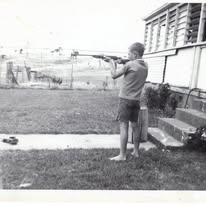
This wasn’t pocket money anymore. It was income, if only in the school holidays. And income reframes relationships.
Diary of a Child Sniper
Chapter 4 – From Gifts to Investments
At 15 there was a pivot.
Up until then, I had been learning. Watching. Absorbing. Refining what had been handed down to me. But somewhere around fifteen, something changed. Accuracy stopped being theoretical. It started paying “rent”.
Fox shooting had a quiet economy to it. No payslips. No applause. Just envelopes of cash passed across ute trays, the unspoken understanding that results spoke for themselves. I didn’t squander that money. I banked it and then converted it. Skill into equipment. Precision into possibility.
That was how I came to own the .222.
At fifteen, I bought a Tikka .222 with a pistol-grip stock and a fully bedded action. Not borrowed. Not supervised. Bought. Mine. Dad already had a Sportco .222, and it was a good rifle in the way farm tools are good, reliable, serviceable, forgiving. But this was different. This wasn’t a tool. This was an instrument.
The moment I settled behind it, I knew. The stock sat into the shoulder like it had been shaped for me alone. The action returned to battery with mechanical indifference, as if it assumed perfection was the baseline. It didn’t forgive. It didn’t correct. It simply reported the truth.
And the truth was now mine to manage.
It was around this time that Uncle Peter entered the story in earnest. If Dad was practical competence, Uncle Peter was discipline incarnate. A true marksman. A man whose shooting credentials weren’t stories but certificates, every Sporting Shooters Association medal available, capped by the Diamond Award. Ten shots. Two hundred yards. All inside a circle smaller than a twenty cent piece. In reality, tighter than that. A group measuring three-tenths of an inch.
His idea of shooting had nothing to do with speed or volume. It was about bedding yourself, not just the rifle, but the body. Finding a position of absolute repeatability. Bone supported by bone. Muscle relaxed to the point of irrelevance. Breathing slowed until it no longer argued with the trigger.
“Stability,” he would say, and mean stillness so complete the shot felt inevitable.
He was also the first to explain to me that ammunition mattered as much as marksmanship. Factory-loaded rounds were consistent enough for most men. But consistency wasn’t the goal. Control was.
So I bought reloading equipment. Scales. Dies. Manuals dog-eared with notes. I experimented obsessively. Powder charges adjusted by tenths. Seating depths altered by feel rather than measurement. Each combination recorded, tested, discarded or refined. It was my first laboratory. My first proof that outcomes could be engineered, not hoped for.
Dad hated it. To him, this was indulgence. Wasted time. Precision masquerading as obsession. He dipped powder charges rather than weighing them, using implements he’d made himself, practical, fast, “good enough.” Time didn’t allow for that kind of fuss, he’d say. Foxes didn’t wait while you chased perfection.
And he wasn’t wrong. Not entirely. But the results told their own story.
The accuracy became surgical. Pelts remained intact. Shots were placed, not hoped for. The animal dropped where it stood, the energy spent exactly where intended. There was a strange, unsettling satisfaction in that, not in the killing, but in the absence of chaos. Nothing wasted. Nothing uncontrolled.
That changed when we moved to Silver Match projectiles.
Hollow points. Designed for accuracy, yes, but also for violence. Where earlier rounds passed through cleanly, these tore. Vast, irreversible damage delivered with the same precision. The lesson was immediate and sobering: refinement didn’t just increase control, it amplified consequence.
By then, the shift had already occurred.
This was no longer about following Dad into the paddock. No longer about instruction or permission. I was making decisions, about equipment, about process, about outcome. I wasn’t just learning how to shoot.
I was learning how much power lived in deliberate choices. Owning the rifle mattered more than using it, though I didn’t have the language for that at fifteen.
Borrowed firearms come with invisible limits. They carry expectations. Conditions. An implied ceiling on consequence. You are trusted, but only so far, never with dad’s .222. The gift rifles, the shared rifles, even Dad’s Sportco, all existed inside a framework of oversight. You could act, but only within a corridor someone else had built.
Buying the Tikka collapsed that corridor.
It wasn’t just mine in a practical sense. It was mine in a moral one. The finality of the purchase did something subtle and permanent: it removed the excuse layer. Every shot was now mine because every decision leading to it was mine. I had chosen the rifle. I had paid for it with money earned from results. That transaction hardened something in me. Skill no longer existed for approval or instruction, it existed because it produced outcomes. And outcomes produced money. And money produced autonomy.
The loop closed. That was the moment legitimacy stopped being borrowed and became self-issued.
Uncle Peter understood that instinctively. He always had.
On Mum’s side of the family, he was an outlier, a man defined by his own code rather than the expectations of the room. Quiet. Observant. Unapologetically precise. His defiance wasn’t loud, but it was absolute. He didn’t argue practicality. He ignored it.
His armoury reflected that. Rifles designed for accuracy that made no sense for scrambling over hills or pushing through scrub. Equipment that assumed stillness, patience, and preparation, none of which aligned with the utilitarian rush of farm work. But I was drawn to it. Not because it was useful, but because it was intentional.
He didn’t just validate my skill. He validated my direction.
Where Dad valued usefulness, speed, function, getting the job done, Uncle Peter valued exactness. The idea that the man should adapt to the rifle, not the other way around. That discipline could elevate the same act into something cleaner, sharper, more controlled.
Dad felt the divergence immediately. He didn’t name it as fear or jealousy, but it lived somewhere close to both. To him, I was outgrowing the premise he had built: that usefulness was the highest virtue. That time mattered more than refinement. That enough was enough.
My reloading bench offended that worldview. Scales. Measurements. Notes. Iteration. All of it looked like wasted effort when foxes were waiting. His dipping methods were fast, reliable, good enough, and they worked. He’d been doing it that way forever. The implication that it could be improved felt like a critique, even if I never voiced it.
He wanted a son who was useful. I was becoming something else.
The accuracy that followed wasn’t dramatic. It was incremental. Groups tightening. Pelts preserved. Animals dropping without spectacle. It wasn’t kinder, but it was cleaner. Less mess. Less chaos. Precision masquerading as mercy.
Then came the Silver Match rounds. Hollow points. Designed to perform exactly as engineered. Uncle Peter didn’t present them as a moral upgrade, just a technical one. Better projectiles. Better results. An evolution. And they were.
The same shot placement now produced vastly different outcomes. Where earlier rounds passed through, these ended things emphatically. Pelts were destroyed. Damage was absolute. The violence wasn’t accidental, it was designed.
That was the lesson, whether I recognised it fully or not. Better tools don’t soften outcomes. They finalise them.
There was no guilt attached. No hesitation. Just acknowledgement. The hunt hadn’t become crueler, it had become more efficient. The emotional shift wasn’t toward brutality, but toward detachment. Control replacing reaction. Outcome replacing process.
I didn’t feel less. I felt cleaner. And without noticing it at the time, that was the deeper drift of the chapter.
From usefulness to precision. From permission to ownership. From participation to authorship.
The rifle didn’t make me different. It simply removed the last excuse for not being exactly who I was becoming.
Then the cost began to surface, not as an argument, not as a blow-up, but as something quieter and harder to name.
Dad never said he disapproved. He didn’t need to. It showed itself in the way he handled the aftermath.
The Silver Match rounds left wounds that couldn’t be ignored. Gaping holes where there had once been neat exits. Pelts that demanded work rather than reward. And so Dad adapted, not by questioning the choice of projectile, but by repairing the damage with a kind of gruff, resentful competence. Needle and thread. Fingers thickened by labour doing work that felt unnecessary, imposed.
He became meticulous in those moments, surgically precise, almost spitefully careful, stitching, reshaping, correcting. The furrier would later look over the results and shrug.
“Good enough,” he’d say. “No real damage.” Which was true. But it missed the point entirely.
Dad’s attention wasn’t about preserving value. It was about restoring usefulness after what he saw as excess. Precision, to him, had crossed a line. It had stopped being functional and started being indulgent. The fact that the outcome could be repaired didn’t undo the effort required to do so. Time was being spent where he believed it didn’t need to be.
And that was the divergence.
Not anger. Not rejection. Just a growing misalignment in what we each thought mattered. He valued the work after the shot. I was becoming consumed by the work before it.
Uncle Peter watched this drift with a familiarity that unsettled me.
He had lived it. Within Mum’s family, his commitment to precision, to firearms, to marksmanship as an end in itself, had long since pushed him to the margins. What began as eccentricity hardened into reputation. His armoury, his medals, his relentless pursuit of grouping and repeatability became evidence not of skill, but of obsession.
He was tolerated, not embraced.
The more precision became his identity rather than simply his method, the more isolated he grew. Conversations shortened. Invitations thinned. His world narrowed to ranges, benches, notebooks, and the quiet satisfaction of shots that did exactly what they were told.
At the time, I didn’t see that as a warning. I saw it as integrity.
He had chosen exactness over acceptance and lived with the consequences. That appealed to something already forming in me, the belief that being right mattered more than being included. That correctness, once proven, didn’t need consensus.
But identity has a way of hardening when it’s built too tightly around control. And money accelerated that hardening in ways I couldn’t yet see.
The cash from fox shooting created distance long before it created freedom. It paid for rifles, it paid for an automatic shotgun, for reloading gear, for independence, but independence isn’t always welcomed in a family system built on shared effort and mutual reliance. My earnings didn’t flow back into the unit. They flowed outward, into equipment, into autonomy, into a private loop of capability and reward.
Success insulated me. I no longer needed to ask. I no longer needed to borrow. I no longer needed to wait.
That kind of independence feels like progress when you’re fifteen. It feels like proof. But inside a slowly decaying family structure, it reads differently. It becomes separation. A quiet opting-out of shared struggle. A signal, unintended but unmistakable, that you are preparing to stand alone.
No one challenged it directly. Families rarely do. Instead, the tone shifted. Fewer explanations offered. Fewer shared decisions. A subtle recalibration where my competence was acknowledged but my direction was no longer shaped.
I didn’t rebel. I drifted. And that drift, away from usefulness as far as the farm was concerned, away from collective purpose, toward precision, control, and self-authored outcomes, is what defines this time in my life, more than any rifle or round ever could.
I was becoming very good at doing things alone. And at fifteen, that still felt like strength.
The times together changed.
Accuracy altered my usefulness on the farm, but more importantly, it altered where that usefulness was valued. What had once been an extension of chores, pest control folded neatly into the rhythm of rural necessity, began to stretch beyond the boundaries of home. The paddock was no longer the outer limit of purpose. It became a proving ground.
With the arrival of Uncle Lionel, something crystallised.
If Uncle Peter represented precision and Dad represented practicality, Lionel brought momentum. He understood scale. Understood that effort, when organised properly, could become something closer to enterprise. Between the four of us, Dad, Uncle Peter, Uncle Lionel, and me, a quiet alignment took shape. No formal agreement. No grand declaration. Just a shared recognition that what we were doing could be more than maintenance.
The Fab Four, though no one ever called it that out loud.
Trips were no longer framed as breaks from work. They were planned. Considered. Routes mapped not by scenery but by density. Properties selected by reputation and yield. What might once have been described as a holiday was now something closer to a campaign. A foray, in the old sense of the word — purposeful movement into territory with intent.
We chased pelts.
Not casually. Not opportunistically. Deliberately.
Vehicles were loaded with equipment chosen for reliability rather than comfort. Ammunition prepared in advance, quantities estimated against time and terrain. Nights were long, spotlight beams cutting cones of white through darkness that felt endless and alive. Shots were taken only when certainty outweighed impatience. Misses were analysed. Hits were noted without celebration.
Money changed hands at the end of these trips, not ceremonially, but matter-of-factly. Bundles of skins counted, graded, valued. Cash folded away. The exchange was clean. Transactional. Satisfying in a way that didn’t require commentary.
This wasn’t pocket money anymore. It was income, if only in the school holidays. And income reframes relationships.
I was no longer simply included. I was relied upon. My accuracy with the rifle or proficiency with the shotgun wasn’t a novelty, it was a linchpin. When shots needed to land quickly, they came to me. When margins lessened, where time allowed precision to matter, Uncle Peter took the shot. The work leaned toward me without anyone having to say so.
Dad noticed. Of course he did. But by then, his role had shifted. He was still central, still capable, still respected, yet the axis had moved. The work now followed outcomes rather than hierarchy. That subtle reordering didn’t cause conflict, but it deepened the quiet distance already forming.
The enterprise demanded focus. Focus demanded detachment.
Meals were quicker. Conversations narrower. Everything oriented toward the next night, the next property, the next count. Emotional bandwidth was spent where it produced results. The rest was deferred, then ignored.
What struck me later, much later, was how naturally it all happened.
No one said we were becoming commercial. No one said we were drifting apart. No one said success was changing us. As far as the outside world saw we were simply having our annual holidays
We just followed the logic of competence wherever it led. And where it led was further away from the farm as a family unit, and closer to something colder, cleaner, and more solitary. The hunt had stopped being about belonging. It had become about optimisation.
I was good at that. Too good, perhaps, for a boy who still lived at home but was already learning how to leave without announcing it.
Author