

Diary of a Child Sniper - Chapter 10 - Fox Drives

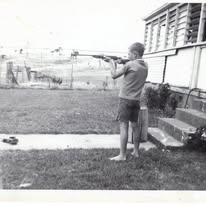
Slug Gun Me

And in doing so, I learned that solitude isn’t always chosen. Sometimes it’s simply the shape of the role you grow into, one that rewards stillness, punishes hesitation, and leaves you standing alone even after the noise has passed.

Diary of a Child Sniper


Chapter 10 – Fox Drives


Fox drives were different.


Not just in scale or organisation, but in what they asked of you. Or more precisely, what they withheld until you were ready, or until others believed you were.


They came later in the season, late winter mostly, when the pelts were heavy and the foxes that remained were the ones that had learned. These weren’t the animals fooled by whistles or drawn in by the sound of something smaller and weaker than themselves. These were the ones that had slipped a fence line, broken cover at the right moment, or simply paused long enough to sense something wasn’t right.


Fox drives were the answer to that kind of intelligence.


They weren’t hunts in the intimate sense. They were operations. Old country ones, informal in language, precise in execution. Not written down, not rehearsed, but understood. Cars arrived early. Gates were shut behind us. Men gathered, talked quietly, assigned positions without ceremony. Everyone knew where they belonged, even if no one said it out loud.


In the early days, I didn’t belong anywhere with a gun.


Shotguns only. It was considered safer that way, wider spread, shorter range, less chance of something travelling where it shouldn’t. That rule alone told you something about how these events were viewed. Safety wasn’t abstract. It was practical, grounded, shaped by experience rather than policy.


My first drives were attended weaponless. That wasn’t a punishment. It was probation.


I was there to learn the rules, the unspoken ones especially. Where to walk. When to stop. How far apart men stood. How fences became lines of demarcation rather than obstacles. I learned that usefulness wasn’t measured in enthusiasm or confidence, but in reliability. In not breaking formation. In not rushing. In not needing to be watched.


When I was finally allowed to be part of the driving team, it felt less like a promotion and more like permission. I had earned enough trust to move the ground rather than guard it. To push scrub instead of waiting at its edge. That role carried its own quiet authority. Drivers didn’t take the shots, but without them nothing happened.


Later still, after my shotgun ability had been found acceptable, and more importantly, after my proficiency with a rifle was understood, I was allowed to sit on the wing.


The outer edge.


That was the place where foxes tried to escape when something went wrong. When pressure broke unevenly. When instinct outpaced planning. Sitting on the wing meant responsibility without visibility. You were there to stop failure, not to participate in success. If you did your job well, no one noticed. To turn an errant fox back into the drive as much as kill it.


The conflict for me was never about fear or readiness.


It existed in the gap between what I knew about myself and what others could see. Knowledge versus perception. Ability versus acknowledgment. I understood my skill set long before it was accepted as real by the men around me. That tension wasn’t voiced. It didn’t need to be. It lived quietly, alongside patience, and grew heavier the longer it went unresolved.


Shared responsibility didn’t dilute anything. If anything, it amplified excitement.


There was no guilt here. No moral reckoning. These events weren’t driven by anger or cruelty. They were driven by need. Foxes were a problem, and problems on farms were dealt with directly. That clarity removed hesitation.


Rules existed, of course.


Certain farmers didn’t want kangaroos harmed. That was stated plainly. Yet there were moments, fleeting, unmistakable, when the sound of shotguns levelling mobs as they crossed fence lines made you aware of how fragile those rules could be. A fence wasn’t just wire and posts; it was permission. On one side, restraint. On the other, necessity.


The breaking of rules wasn’t discussed. It was felt. And it was rarely intentional. More often, it was momentum carrying men beyond consideration. Purpose outrunning reflection.


What I learned watching the men had nothing to do with shooting. It had everything to do with frustration. Not theirs, mine.


Adulthood, as it revealed itself to me in those paddocks, wasn’t about competence alone. It was about recognition. About waiting for others to see what you already knew. About carrying capability quietly until it was invited forward.


There was no mentoring speech. No moment of validation. Trust arrived gradually, unevenly, and often without explanation. You were either placed somewhere, or you weren’t. And you learned to accept that placement without protest.


Violence without anger was the defining feature of these days. That absence was unsettling only in hindsight. At the time, it felt clean. Purposeful. There was no shouting. No bravado. No emotional charge. Just expectation, that foxes would break, that shots would be taken, that the paddock would eventually fall quiet again.


One drive stays with me, not because of a fox, but because of a reminder.


I was moving into position, stepping carefully through scrub I knew well enough not to trust. As I eased past a fallen log, a large black snake erupted from beneath it, sudden and unmistakable. There was no warning. No hesitation. Instinct took over completely.


Self-preservation became the only driver. In that moment, the rules vanished. The formation disappeared. The purpose narrowed to survival. It was a sharp contrast to everything the drive represented, a reminder that despite the structure, the bush still dictated terms.


The snake moved on. I reset myself. Returned to position. The drive continued.


Even within a group, this was still solitary work.


Each station was its own silo. You waited. You watched. You held your ground without backup. The presence of others didn’t soften the isolation, it simply framed it. This wasn’t companionship. It was coordination.


Compared to my earlier solitary hunts, the psychology had shifted, but the essence hadn’t disappeared. The responsibility was still personal. The outcome still rested on individual action taken in silence.


When the drive ended, there was no celebration.


Men drifted back toward vehicles. Numbers were spoken quietly. Pelts assessed with practical eyes. The land returned to itself without commentary.


The foxes that survived the whistles had taught us something.


The drives were the response. And in learning how to stand within them, I learned something else, not about killing, but about waiting to be seen. The drives were, in their own way, a form of community.


Men came from neighbouring properties, from town, from places that only existed in relation to these days. They shared flasks, ammunition, stories that had been told before and would be told again. There was history in the way they spoke to each other, shorthand, assumptions, a shared past that didn’t need explaining. Bonds forged long before I arrived and that would continue long after I left.


Standing among them, I was present but not included.


I wasn’t rejected. That would have been easier to understand. I was tolerated. Allowed space. Given tasks. Trusted with responsibility in narrow, functional ways. But never quite folded into the fabric of it all. I was useful, but not familiar. Known, but not known well enough to belong.


Community, I learned, isn’t created by shared purpose alone. It requires shared time, not just hours spent together, but years. Childhoods that overlap. Stories that intersect. A sense of having come from the same place, even if you now stood on different ground. I didn’t have that. I arrived with skill, with discipline, with competence. What I lacked was lineage.


The men didn’t mean to exclude me. That was the part that hurt the most.


There was no cruelty in it, no deliberate distance. Just an unspoken understanding of who was us and who was around. I existed on the edge of their conversations in much the same way I sat on the wing of the drive, necessary, alert, but peripheral.


Afterward, when men gathered at vehicles and leaned against doors, the talk shifted. Not about the foxes. About weather. Crops. Machinery. People I didn’t know, places I hadn’t been. Laughter moved easily between them, skipping over me without malice.


I stood there, holding my part of the day inside me, unsure where to put it.


I had done everything right. Followed the rules. Earned trust. Proven ability. And still, something essential remained out of reach. Not because I failed, but because fitting in required something I couldn’t manufacture.


That realisation stayed with me longer than any drive. It taught me that competence opens doors, but it doesn’t guarantee welcome. That you can stand shoulder to shoulder with men, share danger and purpose, and still walk away alone. That community isn’t granted for effort, it’s inherited, or slowly absorbed, or never quite yours at all.


The land didn’t care. It absorbed the noise, the movement, the brief violence, and returned to silence as it always did. The foxes were gone. The need addressed. The system reset.


But something in me didn’t. I had learned how to stand within a group without belonging to it. How to contribute without being claimed. How to be present and still unseen. And that lesson, more than the shooting, more than the structure, more than the discipline, followed me long after the paddocks fell quiet.


That lesson didn’t stop at the edge of the paddock.


It followed me into every hunt that came after, colouring them in ways I didn’t yet have language for. What I was learning wasn’t just how to shoot, or how to wait, or how to hold a line. I was learning how to exist inside a world that was fundamentally siloed, a place where reflection was permitted, even encouraged, but where reality operated by a different set of rules altogether.


The hunt is lonely by design.


Even in company, it strips you back to yourself. Your position. Your field of view. Your responsibility. Once you are placed, there is no conversation. No reassurance. No shared moment. The world narrows until it exists only between you and whatever might cross that invisible line you are guarding.


It is easy, in hindsight, to romanticise that isolation. To dress it up as self-reliance or discipline or strength. But at the time, it was simply how things were. You waited. You watched. You listened to your own breathing and learned to ignore it. Thought drifted, but never far enough to be indulgent. Reflection existed, but only in the margins.


Reality was harsher. Because reflection suggests choice,  the luxury of stepping back, of considering meaning. The reality of that world was immediacy. If something moved, you acted. If it didn’t, you stayed still. The space for philosophy was narrow, and it closed quickly.


In that sense, this sniper’s world, though I would not have called it that then, extended beyond the act itself. It became a way of occupying space. Of being separate even when surrounded. Of accepting that what you carried internally might never be shared, or even noticed.


There was no outlet for it.


You didn’t speak about what you felt because there was nothing to say that would land. The language of that place didn’t accommodate uncertainty or emotional residue. It dealt in outcomes. Foxes killed. Stock protected. Jobs done.


Anything else was excess. So you learned to carry it quietly. To store experience rather than process it. To mistake endurance for understanding. The hunt didn’t ask you who you were, or how you felt about what you were becoming. It only asked whether you would hold your ground.


I did. And in doing so, I learned that solitude isn’t always chosen. Sometimes it’s simply the shape of the role you grow into, one that rewards stillness, punishes hesitation, and leaves you standing alone even after the noise has passed.


The paddocks fell quiet. The system reset. But inside me, a different pattern was forming, one where belonging was optional, reflection was private, and reality was something you faced on your own, without expectation of witness or acknowledgement.


That, too, became part of the education.

Author

Menu