

But the land remembers even when we do not. It presses back gently, persistently, reclaiming what it can in the margins.

Centre to the Dish – Chapter 14 The Arrival Isnt an End
- Centre to the Dish
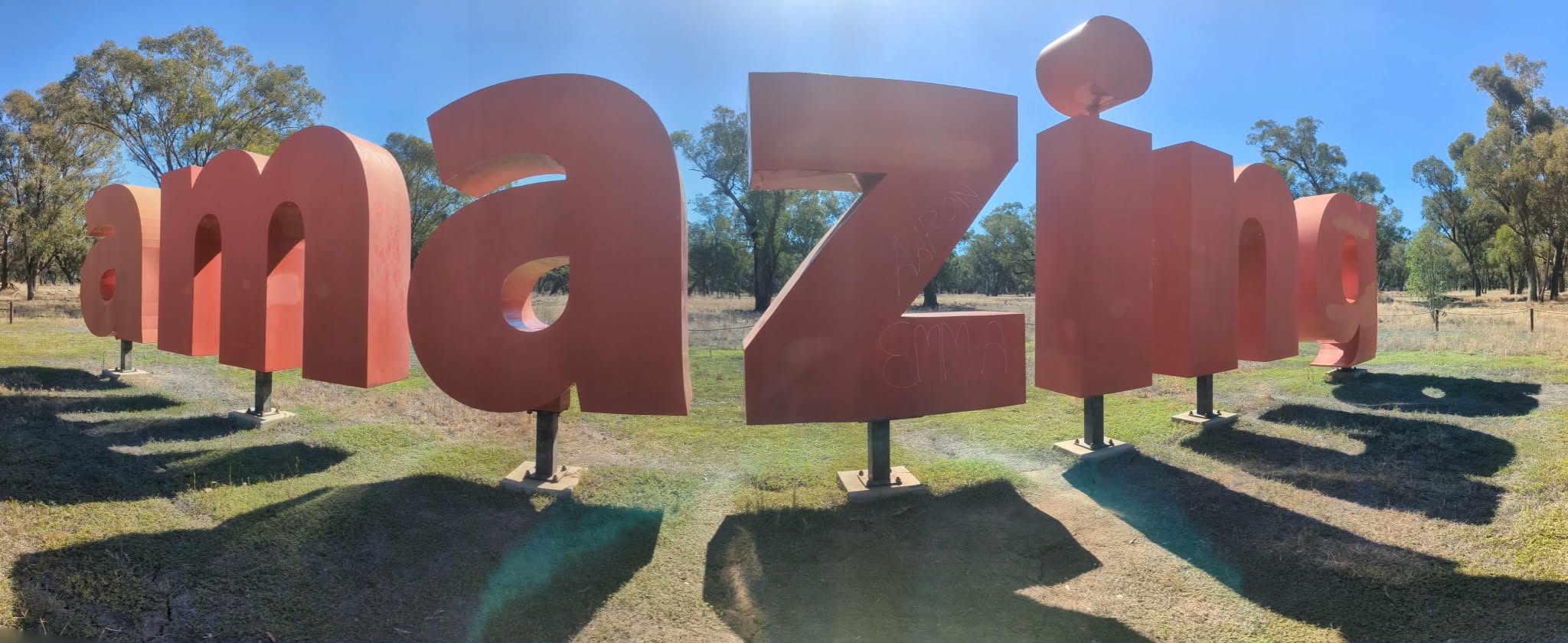
But the land remembers even when we do not. It presses back gently, persistently, reclaiming what it can in the margins.
FROM THE CENTRE TO THE DISH
Gums, Pine Trees and Lignum Scrub
The bush along the road would make the uninitiated driver believe they are travelling through what might have been there prior to civilisation.
It is an easy illusion to accept. The trees crowd close enough to the bitumen to suggest indifference to it, as though the road were merely a temporary inconvenience, a scar that will eventually fade. Between the fence line and the road reserve, the land has been given back just enough breathing space to remember itself. Grasses return first, tentative and opportunistic. Then shrubs. Then, slowly, the familiar silhouettes of gum and pine reclaim the skyline, standing sentinel over a strip of country that has learned how to wait.
This margin, neither farm nor wilderness, is where recovery quietly happens. Agricultural pursuit has pushed hard here for generations, cutting swathes into country that once existed only as story, song, and obligation. The plough and the hoof rewrote the surface, imposed lines where there were once pathways shaped by water, wind, and movement. Yet along this narrow ribbon, the land resists final definition. It regrows sideways. It fills the gaps left behind by utility and neglect. It reminds those who notice that country does not surrender so easily.
The gums are the first to sell the lie of permanence. Their trunks lean inwards, pale and scarred, shedding bark in long, curling ribbons that catch the light like old paper. They are veterans of adaptation, comfortable with fire, drought, flood, and indifference. Their shadows stretch across the road in the afternoon, long fingers reaching for tyres and windscreens, flickering rhythmically as the car moves forward. There is something hypnotic in that cadence, light, dark, light again, a visual metronome that slows thought and dulls urgency. Conversations soften. Music drops in volume. The road becomes less a means of travel and more a corridor of suspension.
Pines intrude more bluntly. They are not native to this place, and they do not pretend otherwise. Their lines are straighter, their green more uniform, their presence an echo of elsewhere. They were planted with intent: windbreaks, markers, solutions to problems defined by imported thinking. Yet even they have begun to settle, shedding needles that soften the ground beneath them, creating a different kind of understorey. Time, it seems, will accept almost anything, provided it is allowed to stay long enough.
Then there is the lignum. Low, dense, almost defiant in its refusal to look inviting. It squats close to the ground, tangled and dark, thriving where water once lingered and might again. Lignum does not care for speed. It does not reach for the sky. It waits. It marks country that remembers flood and drought not as opposites but as partners in an ongoing negotiation. For those who know how to read it, lignum is a warning and a promise all at once.
Together, these coverings perform a kind of camouflage. They hide the debris of invasion, the rusted fence posts, the discarded wire, the culverts and drains that redirect water against its will. From the driver’s seat, it is possible to forget that the road itself is an imposition, that beneath the sealed surface lies compacted earth that once absorbed rain, tracked animals, and held stories older than measurement. The bush obliges the forgetting, softening the edges of disruption, making the intrusion feel almost courteous.
But the land remembers even when we do not. It presses back gently, persistently, reclaiming what it can in the margins. It grows over mistakes. It leans into the road, not to block it, but to remind those passing through that they are guests moving quickly through something that operates on a far slower clock.
East or west, it makes little difference. The shadows still fall. The trees still watch. And for a few kilometres at least, the traveller is invited into a version of the country that feels older, quieter, and more complete than the one drawn on maps.
Author