

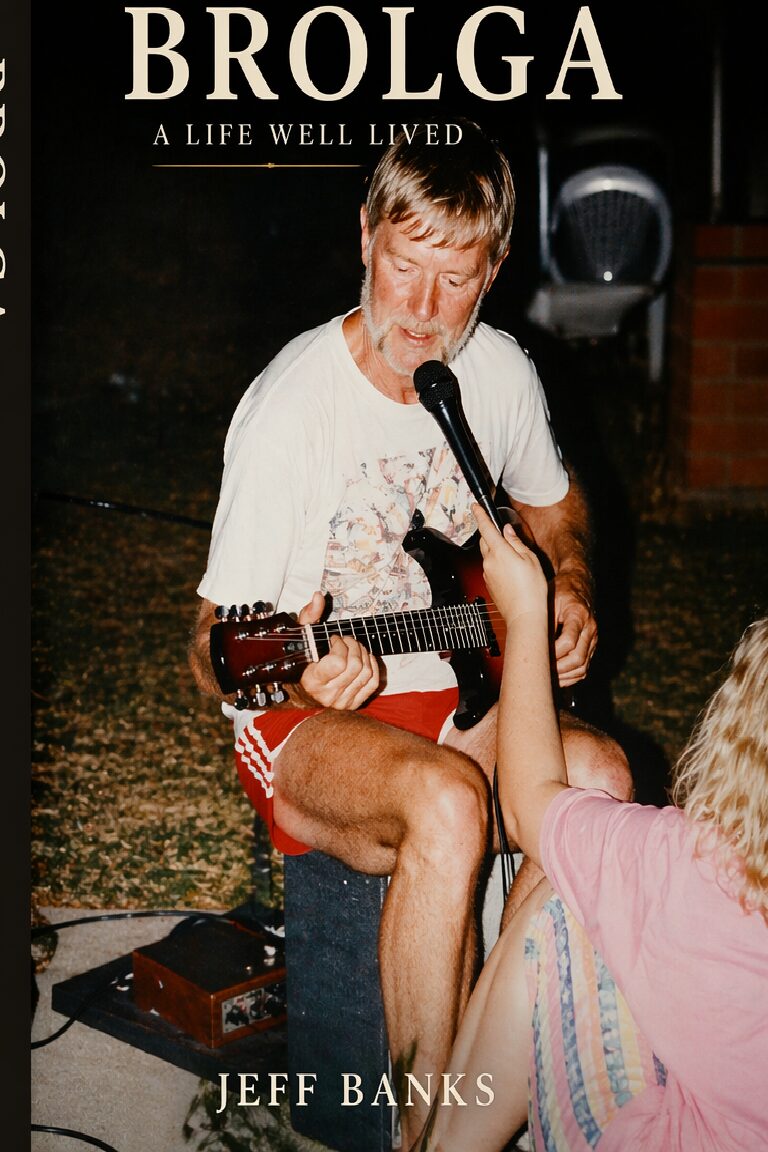
Brolga - A Life Well Lived - Chapter 4 - Making Hay

Brolga - A Life Well Lived - Chapter 4 - Making Hay | Travelling Around Australia with Jeff Banks

Sometimes the climate of those memories is almost comical in its blunt honesty. We’d pile into a shed behind the church, or a culvert that kept the rain from turning the ground to soup, and we’d talk about the next thing we’d pull off the land or the next way we’d bend a rule to keep going. We didn’t have a creed so much as a shared suspicion that life shouldn’t be a neat row of boxes with stamps in the right places.

BROLGA


A Life Well Lived


Chapter 4 – Making Hay


Rain has a way of turning the creek into a memory you almost trust and then second-guess at the edge of your teeth. Out here, the river keeps its own clock and the banks wear the ghosts of a dozen summers in their bark and clay. The ground beneath your boots feels damp with stories you didn’t vote for, and the riverbank sits there, present but light, a quiet audience to whatever stubborn mood the day brings. We’re ten foot from the water, as if distance might keep the truth from slipping into the current.


Brolga is the kind of man who seems to hear the land in a language most of us never learned to speak. He leans into the river’s breath, not quite touching the edge, as if the current might mind being watched. The air carries the smell of wet gum and old iron, and there’s a familiar ache of old memories, his sisters, wine-soaked afternoons and the rough-edge brightness of a family night out, that clings to him like a speckle of dirt you can’t wipe away.


The day feels ordinary and loaded at once, the way a drought suddenly breaks and you’re not sure whether to laugh or lie down. The rain, in this case the oration being recorded, brings a fresh dullness to the light, the sort of brightness you notice when you’re pretending the day isn’t trying to tell you something about time and belonging. The river hums in the gravel, a patient hiss that makes you feel you’ve stood on the threshold of a larger story and still aren’t sure what you’re allowed to say out loud.


Around us the conversation doesn’t need to be loud to feel alive. The weather seems to be listening as well, nudging the moment along with a dry, practical insistence. Brolga speaks with that easy, matter-of-fact cadence that lands like a well-aimed shrug. He talks about rain, sure, but not as a meteorological event so much as a trigger, a reminder that the life you’re trying to live isn’t exactly the life the law wants you to chart. The rules, he implies, sit neat and tidy in their little boxes, but life has a habit of spilling outside them, especially when you’re not the kind who plays the game by the book.


The riverbank holds more than water; it holds tools and memories like a shed you’ve kept tidy for a lifetime. The memory of Lysaght nails and Lysaght rods, the familiar, if not illegal, gear that marked the summers you spent chasing bugs and fish and futures, drifts into the scene not as an advertisement but as a tether to a time when a brand name could mean belonging as much as a birthday. It’s the sort of detail that keeps a life from slipping into a plain story on a shelf, the crackle of old tins in the shed and the near-ghost of a card game that never quite finished.


In the quiet, a drift of memory presses in: my mum and Bev, her sister, both well past the age where the word consent feels like a rulebook you’ve long since misplaced, enjoying time off from “fishing.” The work of living had pressed too close, and the river gave them a whistle of permission to pause. What began as a fishing day, a clever title for a session that was really about breathers and a little mischief, turned into a cheap, bright kind of drunkenness. It wasn’t a romance, more a stubborn, bold need to feel the air again on their skin, to be unanchored from the routine of marriages that might as well have been written in brick. The fishing became a catalyst, a rickety bridge to a longer dusk where laughter could spill and the heart could pretend for a moment that the future didn’t arrive with a stern knock.


The truth sits in the margins, not in the middle of the tale: there was a craving for something more crystallising on the table, something solid to hold, something that tasted like risk and return, all at once. The meals around those years rarely offered that kind of clarity. And so, the want grew, not just for better food, but for a body of work that wasn’t someone else’s burden to bear. If only for a short time, someone else not quite as enebgreited by the years, a cousin’s partner, a younger neighbour, a friend who didn’t carry the same weight of ruined plans, might stand at the stove and conjure up something with real presence. A table that felt earned, not borrowed; a dish that announced: we are here, and we deserve to be fed well for a moment, if only to remind us we’re still capable of choosing a path that isn’t merely the next drink or the next bed. The river’s hush kept turning into a kind of approval, a nod you could hear in the clink of a jam jar and the squint of late-afternoon sunlight on tin.


The memory of the jam, wild fruit, stubborn sweetness, becomes the compass once more. Quandongs and bush plums and a rasp of native tang, all picked with fingers sticky from the day, all pressed into jars that would wait out a winter that tasted of rust and rain and old promises. It’s not just about the harvest; it’s about a quiet discipline against the urge to gulp at happiness and call it enough. The act of making jam, of feeding others with something you’ve coaxed from the land rather than bought, stands as a small rebellion against the larger script: that a life must stay within the lines drawn by rules when the heart knows you’ve got more to offer than a well-timed story.


There were nights when the talk stretched out like a road you couldn’t quite see the end of, and the line between right and wrong blurred into a smear of laughter and the glow of a fire. The women, Mum and Bev, weren’t chasing a grand scheme. They were chasing a version of life that could hold still long enough for a person to recognise themselves again. The fishing, at its core, was just a lens; the reflection it captured showed a need for something more solid than a quick escape: a table with a proper plate, a conversation that could linger, a meal that didn’t arrive with a bow on it from a government agency promising dignity but delivering another empty pocket.


The older memories carry the bite of the day’s rules and the gentleness of the river’s mercy. We weren’t chasing a myth of freedom so much as a moment when the ordinary chores, cooking, cleaning, mending nets, could be interrupted by a shared joke and a plan that felt almost like a future. The jam jars, the old drum net, the familiar clink of cheap wine or something that tasted like it after a long stretch of heat, the sounds and the smells stitched the scene together into something more tangible than the usual day’s talk. It wasn’t about rejecting the law so much as refusing to let it colour every meal with the same stern glaze. If a little risk could sweeten a winter, then a little risk could stand on the bench beside a plate and a glass and be called, honestly, nourishment.


And so we learn, as the river keeps its patient time, that the need for something more, food with substance, company with warmth, a break from the ordinary that doesn’t demand a grand apology, was never truly about defiance for its own sake. It was about survival with a voice, about finding small ways to push back against the edges of a life that didn’t quite fit the outline someone else drew. The law could tell you you’d made a mistake, or that you owed, or that you ought to settle, but the river’s verdict, spoken in the quiet of the bank and the soft ripple of water, was that you could still choose a piece of bread, a pot of jam, a room to breathe, and someone who wasn’t afraid to share the plate.


So the memory lingers, not as a sensational tableau but as a weathered truth: the jam on the shelf, the laughter in the back shed, the taste of something honest and not quite proper. The river remains ten foot away, listening, as if it understands that sometimes the best way to live with the law is to feed it a little humanity, to insist that there be room at the table for those who’ve walked too long in the sun and found themselves still a little hungry for something more than the day’s duty.


My voice finds the river again, turning the memory into a lesson rather than a tale told for its own sake. It isn’t about cod nets, or brand names, or the exact shade of tea that passes for wine in a room full of humour and half-aimed bravado. It’s about a life that refuses to be compressed into neat lines on a page or into a set of rules that pretend to own the ground you stand on. It’s about larrikinism, that stubborn, practical impulse to question the obvious, to test the edges of what you’re allowed to say or do, and to carry on when the world prefers you to stay quiet and safe.


The river offers its own counsel, slow and patient, and the sound of a distant wheel turns the air into something almost musical. Interruptions, wind tipping a leaf, the drip from a tired eave, a car rolling by on a road that isn’t here anymore, are not nuisances but small pieces of the scene that keep the moment honest. Brolga’s humour surfaces in a dry, steady way, the kind you notice only when you stand still long enough to hear the ground speaking back. He speaks of life in terms of tempo and balance: you do your best with what you’ve got, you stay honest about your limits, and you never pretend the rules are the same thing as the life you’re trying to live.


The day eases into a longer quiet, the rain leaving beads on grass and wool and the old nets drying near a post that’s seen more seasons than any one person should reasonably endure. In that quiet, the river seems to lean closer as if to offer a small piece of advice, not a grand revelation, just a reminder that the ground you stand on is real, and the path you choose to walk on it is yours to walk with a certain stubborn grace.


And so the memory spins forward again, not as a story with a tidy ending but as a thread that keeps tugging at the sleeve of the present. The code and the law may want a straight line, but life, that larrikin, practical life, keeps insisting on a rough, useful weave: a little mischief, a lot of honesty, and a willingness to stand ten foot from the river and tell the truth in a voice that sounds like a friend who has spent a lifetime listening to the land. The rain keeps falling, the river keeps listening, and the bank stays there, a quiet and sturdy witness to the moment when a life gets written not in rules but in weather and memory and a stubborn, everyday kind of courage.


We drift along the bank a little further, as if the ground itself might offer us a map we’re allowed to use. The rain has softened the world into a kind of damp hush, but the noise of the day isn’t done yet. It’s in the scrape of a stick on the undergrowth, the distant howl of a dog that’s wandered down from somewhere and found nothing to chase but its own tail, and the quiet insistence of memory stitching itself to the present like a thread you can feel but can’t see.


Brushes with the law aren’t stories you tell to impress the night. They’re the sort you tell because they’re true enough to reach out and grab you by the sleeve when you’re trying to pretend you’ve moved past them. We were rowdy enough, back then, loud enough to pull a few eyes from their verandahs and keep the street talking for a week about what a crowd of kids could conjure when the river and a bottle of something cheap decided to share the afternoon. The law knew our names, or at least our faces, long before we could spell the kind of life we were trying to pretend was just a phase, not a compass. There were nights when the bonfire crackled so loud the neighbours forgot to mind their own business, and there were mornings after when a patrol car hummed to a stop at the edge of the dust, and you learned to count to ten and pretend you’d forgotten your own shoes. It wasn’t romance, not really; it was the stubborn ache of being young and certain you could ride the wind just enough to land somewhere better than a letter in the mail about “your responsibilities.”


On those wanderings, the endless pursuit of a little more than our share felt like a craft you learned from the river itself. There was always a boundary you didn’t want to admit was there, a line you crossed when the thought of staying still grew heavier than the thought of getting away with one more thing. We hunted for little treasures, the fruit of the bush, the kind you could cook into jam when the day grew tired of being generous. The voice of the place was in our hands as we picked, careful not to strip the land bare, but hungry enough to imagine that a jar of jam made with wild fruit could sweeten a winter that would otherwise taste like rust and rain and old bills. We’d wash the day down with whatever was on offer, tea that tasted like it had learned to survive on a chair in the kitchen, a cousin’s laugh that could split a rib of seriousness clean in two, and somehow that made sense of the world: a way to take what you needed without pretending you owned the ground.


There were the nights when the talk stretched out like a road you couldn’t quite see the end of. We weren’t asking for a handout, not exactly. There was always a sense that help up, when it came, should come with its own kind of dignity, an offer to shoulder a little more of the load, not a pouch of excuses hiding a lack of effort. The government, with its posters and its slogans and its endless “programs,” would try to present itself as a guardian, a sponsor of the journey toward a respectable life. But the memory isn’t generous towards promises that sound solid while the water still runs cold. It’s the old truth again: a help up that’s really a help out is no help at all for a person who’s already learned to live with the weather and the ground and the stubborn, stubborn instinct to keep moving when the map ends.


Sometimes the climate of those memories is almost comical in its blunt honesty. We’d pile into a shed behind the church, or a culvert that kept the rain from turning the ground to soup, and we’d talk about the next thing we’d pull off the land or the next way we’d bend a rule to keep going. We didn’t have a creed so much as a shared suspicion that life shouldn’t be a neat row of boxes with stamps in the right places. If there was a moral in the semester, you could put it down to the fact that you learned more from the river than from the pages of any rulebook: the river never asked your permission to keep moving, it just did, with a quiet authority that didn’t demand attention, only a steady, unspoken offer to show you where you stood.


And in the middle of all that, the fruits, the wild, uncertain fruits, called like a chorus. Quandongs might’ve tangled the memory with a bright tartness, bush plums offered their stubborn sweetness, native raspberries blurred the line between risk and reward. We tasted them with fingers sticky from sweat and rain, and we decided that the jam we could coax from them would be enough to hold a winter together when the house was cold and the fridge light refused to work. The act of gathering wasn’t just about eating; it was a quiet assertion that you could take something from the land and make something out of it that kept you going when the world looked too big, too straight, and too sure of its own auras to share the road with you.


That’s where the trip here, the river, the bank, the old nets and the memory of a drum net and the cod that could step straight out of Mum’s stories meant something more than an afternoon’s wander. It was a slow apprenticeship in the art of asking for a fair deal without pretending to deserve a lion’s share. The law could remind you of your duties with the gravitas of a courthouse clock, but it was the small, stubborn acts, the jam made from wild fruit, the careful return of a few berries to the bush, the refusal to spit bitterness back at the world, that taught you what “a help up” could mean when you’re standing ten foot from a river that knows all your names and none of your excuses.


The interactions with authority left a mark that wasn’t always clean or neat. There were moments when you could see the man who wore the uniform, the one who believed an arrest would fix a life, and you’d wonder what kind of weather might melt that certainty. It wasn’t about disliking the police or resenting the system so much as about understanding that the system sometimes preferred to tell you you were shaped by rules rather than by a shoreline, that your worth was measured by the speed with which you could stay inside the lines rather than by the courage you showed by stepping outside them. And if you listened long enough, you’d hear the river’s own verdict: the ground is real, and the life you fight to build on it must be stubborn enough to tolerate a little rain, a few setbacks, and a chorus of voices that keep asking for something better, not for themselves alone but for the next person who walks to the edge of the riverbank and wonders where the right path might lead.


So the jam jars sit in memory, the fruit unripe and sweet, the day’s rain still learning how to land on the bank without breaking the ground. The government’s voice, soft or loud, helpful or performative, feels smaller here, less a solution and more a suggestion to keep going, to keep asking for a hand up that’s earned, not handed. We stand ten foot from the river, listening to the current’s faithful old talk about time and effort, and the lesson isn’t a sermon or a lecture. It’s the sense that life’s worth isn’t measured in neat, tidy outcomes but in the honest attempt to do better than yesterday, with hands still sticky from jam and a heart stubborn enough to keep asking, keep wandering, and keep sharing the journey with the people who belong on the same rough road and share the same quiet dream of something better, if only for a moment longer.

Author

Menu