
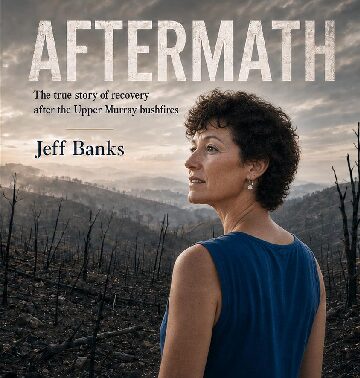
AFTERMATH Chapter 12 - Downsizing the Team

AFTERMATH Chapter 12 - Downsizing the Team | Travelling Around Australia with Jeff Banks

Downsizing the team was practical. It was expected. It was probably inevitable. I can say all of that honestly and still say it hurt. The hurt was not because I felt discarded, because I did not. The hurt was because I had become part of something, and something had become part of me.
AFTERMATH

Chapter 12

Downsizing the Team

It did not happen in one great dramatic moment, with someone standing at the front of a room and announcing that it was all over. Disaster recovery rarely works with that sort of tidy theatre. It was more like weather moving in from the hills, first as a change in the air, then as a darker line on the horizon, then as the thing you had known was coming but still did not quite want to admit had arrived.

We had always known the team would not be there forever. That was part of the deal from the beginning, even if none of us spent much time thinking about it when there were people to visit, meetings to organise, grants to chase, gaps to fill, and another person somewhere up a side road who needed something printed because the online form might as well have been written in Latin. The roles were fixed-term. The work was never meant to become permanent. On paper, that made sense.

The trouble with paper is that it does not smell like smoke. It does not sit across from a farmer who has lost fences, sheds, stock and every reliable shape of the life he knew. It does not watch a small town try to put itself back together with volunteer committees, tired voices, donated food, half-working systems and people who are already carrying more than anyone should have to carry. Paper knows when a contract ends. People do not recover to a contract schedule.

For a long time, there was no clear sense of who would go, when they would go, or what would be left behind. We knew there would be a transition. We talked about transition often enough that the word became another piece of recovery language, like resilience, community-led, trauma-informed and all those terms that are useful until they begin to sound too neat for the mess they are meant to describe. We were planning how communities would step forward as we stepped back, but somewhere underneath that we had to start asking where we would be standing once we had stepped back.

I went to my regional director and asked the question plainly, because by then I had learned that avoiding the question did not make it kinder. I asked what my future looked like. I asked what might replace the role and where I might fit. It was an open and honest conversation, which I appreciated, because by that stage I did not have much patience left for conversations wrapped in soft paper and tied up with a departmental bow.

What became clear was that the work was going to change. The role that might exist beyond that point would sit across a much broader geographical area. It would be less intimate, less tied to particular places and particular people, and much less connected to the sort of community work I had come to understand as the heart of recovery. It was not that the future role was unimportant. It was simply not the same work.

That was probably the first proper trigger for me. I remember thinking, all right, perhaps my time in this is done. Not because I had stopped caring, and not because the work was finished, but because the shape of the work was changing into something I could not quite see myself doing with the same purpose. I knew what had kept me in the Upper Murray. It was not a title, a department or a line on an organisational chart. It was the people, the places, the trust, and the small daily permission to help in ways that actually meant something.

There were other changes happening around the same time. When Bushfire Recovery Victoria was first stood up, it sat in a space that allowed it to move quickly, think differently and be flexible enough to respond to a disaster that did not wait politely for paperwork to catch up. That mattered. In those early stages, we needed an organisation that could get up and running, find its legs, and work out what the ground was telling us instead of simply applying a system that had been designed somewhere else.

Later, the organisation shifted into a more bureaucratic departmental space, and I found that hard. It came with more policy, more layers, more discomfort, and a culture that felt to me much more command-and-control. I do not like being critical for the sake of it, and I know there are good people in every system, but the culture I felt around that space was old-fashioned and very hierarchical. It had a retired-military sort of feel to it, where leaders were not meant to be questioned too much and the answer to change was often that this was how things had always been done.

That was never going to sit easily with me. Recovery work, at least as I understood it, depended on listening properly to people who had already had enough decisions made over the top of them. It depended on adjusting, questioning, admitting that the map did not know the road, and accepting that a small community hall on a wet night might teach you more about what was needed than a very confident document written three hundred kilometres away. I knew I could operate inside systems, because you have to, but I also knew when a system was starting to press against the part of me that needed to work differently.

So when the announcement came that my role would be changed, folded in with other roles, lifted up into a regional profile and re-advertised in that broader form, it was not a shock in the way people might imagine. It did not feel like betrayal. It did not feel like I had been thrown away. It felt like the machinery of government doing what the machinery of government had probably always intended to do, even if we had forgotten that while we were out on the ground.

The disappointment was the shock. That is a different thing. You can understand something completely and still feel wounded by it. You can know a role was temporary and still feel a strange grief when the ending begins to take shape. You can agree with the logic and still sit there thinking, yes, but there are people I am not ready to leave yet.

There were plenty of unfinished things. Some of them were practical and obvious, because recovery projects are not small jobs. Some of those projects were always going to take five, six or seven years. Roads, halls, fencing, community facilities, sporting grounds, grants, rebuilding plans, business recovery, mental health supports, all of it moved at the speed of people, weather, money, contractors, paperwork and exhaustion. Anyone expecting a neat finish line had not spent much time in a fire-affected community.

But the part that felt most unfinished was harder to put into a spreadsheet. It was the foothold people were still trying to find. It was the trauma that had not been dealt with, the mental health work that still had to happen, and the community cohesion that was still being rebuilt in places where people had been through something too large to simply file under “disaster event.” The fire had taken physical things, but it had also disturbed relationships, routines, confidence and identity. Those things do not return because the funding cycle says it would be helpful if they did.

We had good organisations coming in behind us. That matters, because I do not want to make it sound as though we walked away and left people standing in a paddock with nothing but a clipboard and a cheerful brochure. Gateway Health was there. Council had strengthened some of its community development capacity. Other programs and workers were in place, and many of them did good, thoughtful, steady work. The communities were not abandoned.

Still, there is a difference between knowing people will be supported and knowing you will not be the one they ring anymore. There is a difference between making a referral and being the person who has already sat at their table, heard the story, remembered the name of the adult child who is struggling, and understood why the next simple form might be the thing that tips someone over on a bad day. Recovery is full of those small differences.

We spent a long time trying to leave properly. Through the community recovery committees, we kept people informed about what we knew, when we knew it. We did not want shocks or surprises. That was important to me, because those communities had already had enough sudden changes imposed on them by fire, road closures, weather, systems and decisions made from elsewhere. If we were going to step back, they deserved to know what was happening.

Each community recovery committee had its own transition plan. We sat down and worked through where they were up to, what still needed to happen, who needed introductions, who needed referrals, what supports were in place, and what gaps still looked worrying. We tried to underpin those plans with local knowledge, the experience of the team, and whatever research we could draw from other fires and other recoveries. Not everyone would have agreed with every part of the plans, because communities are not one single mind sitting around a table nodding in unison, but we did the strongest work we could at the time.

Some people were angry, and I understood that. The anger was not usually directed at us in a personal sense. It was more about the length of recovery and the feeling that government never quite understands how long the aftermath lasts once the immediate emergency disappears from view. There is a point where the cameras are gone, the announcements become less frequent, the public attention moves on, and the people who are still living with the consequences are left wondering how something so huge can become yesterday’s news.

Most people, though, took the news with the kind of stoicism I had come to recognise in the Upper Murray. It was not passive. It was not simple acceptance. It was more like, all right then, this is the next thing we have to deal with, so we had better work out how to deal with it. Rural communities are often described as resilient, and they are, but that word can sometimes be used to avoid seeing the cost of asking people to be resilient again and again.

There were particular people I worried about. There were people who had already lived through earlier fires and then came into this recovery carrying their own history, their own losses, and their own deep understanding of what it meant to lose everything. There were people who worked intensely for their communities, not because they were untouched by trauma, but because they knew what it was to be in the middle of it. Those people gave a lot, and sometimes I wondered who was making sure they were being held as well.

There were also people who had stepped into leadership because the community needed them to, not because they had ever planned to become the face of anything. One woman in particular stayed with me. She was involved in one of the badly damaged villages, busy with family, farm life, local sport, the shop, and more responsibility than any sensible person would put on one set of shoulders. She was humble, capable and terrified of being asked to chair something.

We encouraged her to step up because we could see what she could not yet see in herself. She had the skills. What she lacked was confidence, and confidence can be built if people around you do not treat your uncertainty as proof that you are not ready. We supported her, helped her find the right people, helped her with the practical bits, and watched her grow into the role. It was one of the quietly beautiful parts of the work.

Leaving someone like that was hard. She knew she could pick up the phone if she did not know what to do, and I would stop and talk it through with her. That sort of support is not dramatic. Nobody opens a funding announcement for it, and it does not photograph particularly well. But in recovery, those conversations can matter enormously. Sometimes a person does not need a whole new program. Sometimes they need someone who knows the background, answers the phone, and says, all right, let us work this out.

There was another woman from Walwa who I came to know through the recovery. I did not know her from a bar of soap before the fires, as the saying goes, but over time I followed her journey alongside her. She had taken on leadership at different points, sometimes brilliantly and sometimes through the fog of her own trauma, which is not a criticism. That is often what leadership in a damaged community looks like. People lead while still bleeding, and then everyone acts surprised when it is not always neat.

After I left, I lost track of her for a while, and then found myself wondering how she was going. That happened with quite a few people. They would come back into my mind at odd times, while I was doing something completely unrelated, and suddenly I would be back there wondering whether a family had managed to rebuild, whether a farm was still carrying the same strain, whether a community committee had found its next bit of strength. Later I discovered she had written a book about her experience of the fires. I bought it, read it, and got back in touch.

That is one of the strange things about leaving recovery work. The formal relationship ends, but the human relationship does not always obey the paperwork. I can go back to Walwa now and there are people I would want to visit, not because I am their recovery worker anymore, but because I care how they are. I would not call all of them close friends, because that would not be quite right, but some of them became friends in the only way people can after sharing a difficult stretch of road.

I did feel valued. I never felt discarded. People told me in small ways all the time, and small ways are often the ones I trust most. Someone would say they were disappointed if I could not come to something, even if it was not strictly part of my role. Someone else would ring because they could not access a form online, and I would jump in the car and take out paper copies because that was the simplest and most useful thing to do.

In isolated areas, people are used to managing on their own. They are used to distance, limited services, patchy access and the quiet expectation that they will just get on with things. When someone makes the effort to go out of their way, to drive the road, to bring the forms, to sit at the table, to remember what matters, people notice. They are often very direct in their appreciation, which can be both lovely and uncomfortable when you are just trying to do the job properly.

There was a man outside Corryong who wrote poems and would bring them to community recovery committee meetings. I used to make a place for him on the agenda, because it mattered that his voice was heard. People knew he wrote poems, but giving him that space was a way of saying his contribution belonged in the room, not as decoration, but as part of the community’s own way of making sense of things. When I left, he wrote me a poem, and it was one of those gifts that carries more weight than the person giving it probably realises.

Even years later, I can walk into places around Corryong and be recognised. Someone will know what I drink, or call out hello, or remember me not as a representative of an organisation but as Tracey, the woman who helped during the fire recovery. That distinction matters. Organisations come and go. Logos change. Teams are stood up and then downsized. But people remember who turned up.

Inside the team, I felt valued too. When I left, the organisation made a fuss, and that was lovely. I still have the e-card with messages from colleagues across Victoria, and they were not the sort of generic messages people write because someone has passed around a link and guilt has done the rest. Many of them were thoughtful and personal. They reminded me that the work had meant something beyond the kilometres driven and the meetings attended.

There was no great anger in me when the role ended. There was disappointment, and there was fear. Some of the council team on the ground in Corryong were anxious when I left, because I could fill gaps they could not fill, just as they had filled gaps for me. We had become a web of people covering what the system did not always cover cleanly. Losing one part of that web was always going to feel risky.

The harder truth was that I had more to give, but I probably would have said that no matter when the ending came. Recovery work does that to you. There is always one more conversation, one more project, one more family, one more meeting, one more gap you think you might be able to close if you just had a little more time. You can chase “finished” forever in that sort of work and never quite catch it.

At the same time, I knew I needed to leave for my own health and wellbeing. That was not easy to admit. I had put so much of myself into bushfire recovery that I had almost forgotten I had other skills, other experiences and another life beyond the Upper Murray. I had bonded strongly with the people in that space, and with the place itself. Getting my head out of it felt almost disloyal, even when I knew staying too long would not necessarily help anyone.

One of my sons said something that shook me more than I expected. When I told him I was thinking seriously about applying for other jobs before the role officially finished, he said it would be good if I got out of that space, because it would be nice to have his mother back. It was not said cruelly. That was probably why it hurt so much.

I had not realised how much of my time and energy the role had taken. I had known I was tired, of course. Everyone knew that. Tired was almost part of the uniform by then, even if nobody issued it officially. But I had not properly seen how little was left for the people who loved me outside the work. There had not been much visiting, not much spare capacity, not much of me available once the fire stories, travel, meetings, phone calls and constant emotional attention had taken their share.

That comment gave me the push I needed. I started looking seriously for other work, partly because it is easier to get a job while you still have one, and partly because I knew I needed to create a landing place before the ground disappeared from under me. I was fortunate that a role came up at Gateway Health. I knew people there, and I knew the broader work. At first I was not sure I fitted the role, but a conversation with the prospective manager helped me see the lines between what I had been doing and what I could bring into a new space.

Getting the job was a relief, but it was not a clean break. I do not think anything could have made it clean. On the first day after the old role ended, I cannot remember exactly what I did, but I can imagine I slept in for a very long time. That might sound ordinary, but after years of calculating how long it would take to get somewhere on isolated country roads that always seemed to take twice as long as the map promised, not having to get in the car and go somewhere felt like a luxury bordering on suspicious.

I think that is partly why I enjoy working from home now. I had not really connected that until later, but there is a relief in having a day that is not built around travel, weather, road conditions and the knowledge that you may arrive already tired before the actual work has started. In the Upper Murray, distance was never just distance. It was time, attention, risk, isolation and the difference between being able to help quickly and having to work around country that did not care what was in your diary.

After I left, I did not really leave. Not in the emotional sense. I still read the local news. I still keep track of what is happening around Corryong, Walwa, Cudgewa, Tintaldra and the smaller communities that never fit neatly on the bigger maps. I still keep in contact with people from the recovery team. I still ask how families are going, what projects are moving, what services are getting up there, and whether the people I remember are all right.

I do not think I will ever fully get out of that space, and I am not sure I want to. That part of my life changed me. It changed the way I think about work, leadership, community and trauma. Before the fires, I had training and experience in trauma-informed practice. I could have listed it as a skill if someone asked, but it would not have been the first thing I reached for. After the fires, it became the lens I looked through almost automatically.

That was not always healthy. When I moved into another organisation and another role, I found it hard not to bring the bushfire recovery lens to everything. I over-committed to supporting individual people in my team. I prioritised wellbeing so heavily that sometimes I probably lost sight of other parts of my role as a leader. It came from a good place, but good intentions can still wear grooves in the wrong road.

Gateway still had workers going into the Upper Murray, and sometimes I would hear conversations about what was happening up there. If I heard the word Corryong, Upper Murray, fire or disaster, my ears would lock onto it. I could be in the middle of something else, but suddenly my whole attention would swing back to that place. I would want to know what was happening, who was involved, whether a service could go up there, whether a family was being supported, whether something had been missed.

At one point, during a conversation about all of this, I could smell smoke. There was no smoke, not in any practical sense, but my body did not seem terribly interested in practical sense. It remembered what it remembered. That is the thing about trauma, even trauma absorbed second-hand through story after story after story. It finds its way into you. It sits quietly until a word, a smell, a place or a conversation opens the door.

My manager recognised it, and I recognised it too. Eventually we had the conversation about whether I needed some emotional support. I went through the EAP system and then found my way to a psychologist to help unpack some of the PTSD-type responses that had come from the work. I was lucky that my workplace helped me begin that process, although at a certain point it was not fair to expect one organisation to keep paying for the damage done during another role. I kept going myself after that.

Looking back, the biggest thing I would change is the support built around recovery workers from the beginning. I would have put clinical supervision in place right from the start, not just for the obvious frontline workers, but for everyone touched by the work. Managers, office staff, payroll people, communications people, the people reading stories and deciding what could be printed, the people taking calls, the people sitting in rooms where grief came out sideways as anger. Everyone should have had access to proper support.

Most people would probably have said they did not need it. That is exactly why it should have been there anyway. In that kind of work, you do not always know what you are carrying until much later, when you have finally stopped moving and the thing catches up. We were good at thinking about transition plans for communities. We were not as good at thinking about transition plans for workers.

That is what I would want readers to understand about pulling recovery workers out of disaster communities. It is not only a staffing decision. It is not only about contracts, budgets, roles and organisational charts. It is also about people who have spent years holding the edge of other people’s pain and then being expected to put it down neatly because the role has ended.

There should have been a process for unpreparing us, if that is the right word. We had been prepared to go in, to listen, to support, to help communities rely less heavily on us over time. But there was not the same deliberate work around helping us step out, unpack what we had heard, place it somewhere safe, and understand who we were going to be once we were no longer carrying that responsibility every day. We helped communities transition away from us, but we did not transition ourselves with the same care.

Maybe that sounds a bit strange unless you have done the work. From the outside, a role ends and a person gets another job. From the inside, it is more complicated. You leave behind people whose stories you know. You leave behind halls where you have sat through hard meetings, roads you have driven too many times, cafes where people know your order, and committees that once rang you because they did not know what to do next. You leave behind work that is not finished because recovery is never really finished.

Downsizing the team was practical. It was expected. It was probably inevitable. I can say all of that honestly and still say it hurt. The hurt was not because I felt discarded, because I did not. The hurt was because I had become part of something, and something had become part of me.

In the end, I had to learn that leaving was not the same as abandoning. That was the lesson I found hardest. Good people remained. Other organisations continued the work. Communities took up the reins in the way communities do, not always neatly and not always without anger, but with the stubborn determination that seems to live in those valleys and hills. My part changed, and I had to let it change.

I still cannot hear certain words without part of me turning back toward the Upper Murray. I still wonder how people are going. I still feel the pull of the place, and I do not apologise for that. Some work passes through your life, and some work leaves ash under your skin. This was the second kind.

The team was downsized, but the aftermath was not. It kept moving through people, through towns, through farms, through families, and through those of us who came to help and then had to learn how to go. That is the part no transition plan can fully capture. The work ends on paper long before it ends in the body.

Author

Menu