

Through all of this, the land remained what it had always been.

Centre to the Dish – Chapter 14 The Arrival Isnt an End
- Centre to the Dish
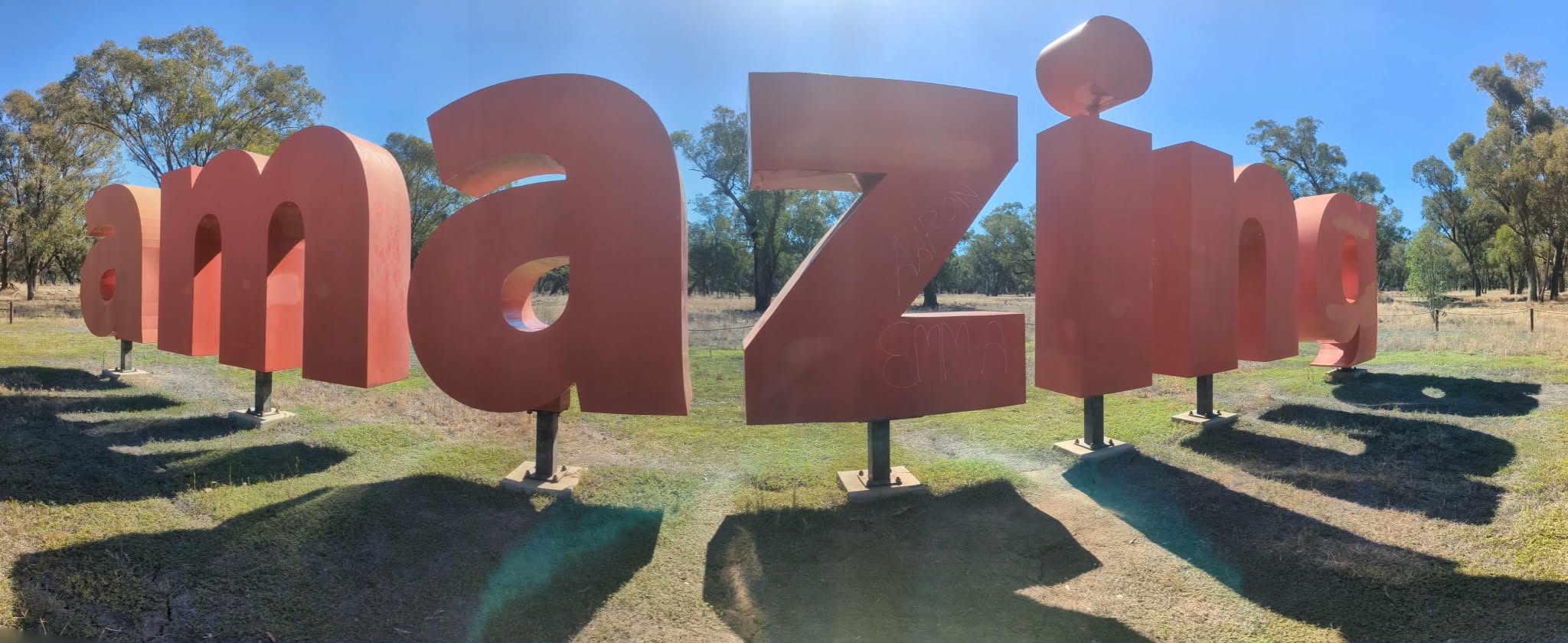
Through all of this, the land remained what it had always been.
FROM THE CENTRE TO THE DISH
Introduction
My Country said it best, and said it early: I love a sunburnt country… Most Australians can recite the words. Far fewer have stood still long enough to feel what they describe.
Away from the coast, the land stops trying to impress. It opens instead. Horizons lengthen, sky takes precedence, and distance becomes something you sense rather than measure. On a clear day you can see forever, or at least far enough for time to loosen its grip.
Just out of Condobolin sits Mount Tilga, often described as the geographic centre of New South Wales. It is a modest claim, offered without signage or ceremony. From the top, the view isn’t dramatic in the cinematic sense. It’s instructive. Blue haze folds into blue haze. The red alluvial dirt underfoot tells a different story to the cool distance ahead. Scrub sits quietly, not threatening, but never benign. This is a landscape that does not announce danger, it assumes you know better.
Long before it was measured, mapped, fenced or named, this was Wiradjuri Country.
The river running through this place is commonly known as the Lachlan, but its older name is Galari Bila, the long river. The name is not poetic flourish; it is description, function, truth. Galari Bila was not a boundary. It was a lifeline. A corridor of movement, food, ceremony, knowledge. To follow it was to understand where to be, and when.
For more than 65,000 years, Wiradjuri people lived here by reading systems rather than conquering them. The land was not something to be improved, only understood. The sky was not scenery; it was instruction. Gugurmin, the Great Emu in the Sky, stretched across the Milky Way, its position telling people when emu eggs were ready, when seasons shifted, when it was time to move. Survival depended on literacy of place. Misread it, and there were consequences.
These were not simpler times. They were more exacting ones.
When Europeans arrived, they brought different assumptions. That land could be owned. That water could be redirected. That fences could replace knowledge. For nearly two centuries, farmers have fought this country with varying degrees of success, droughts, floods, fires and failed seasons leaving their marks. Some learned. Some broke. Some stayed long enough to begin to listen.
Through all of this, the land remained what it had always been.
This journey follows the Henry Parkes Way, but the name itself is a reminder of how stories are layered. Roads carry one history. Country carries another. We’ll travel it not as tourists racing between points on a map, but closer to the way the land itself invites movement, slowly, attentively, and with curiosity.
We’ll stop where something feels worth stopping for. We’ll take side tracks that don’t promise anything. We’ll notice the ordinary, because out here, the ordinary is where meaning hides.
The destination will come when it’s ready. For now, Galari Bila, the plains, the sky, and the silence have the floor.
Author