

The same rules apply. Don’t overstay. Don’t claim it. Respect the place and it will return the favour.

Centre to the Dish – Chapter 14 The Arrival Isnt an End
- Centre to the Dish
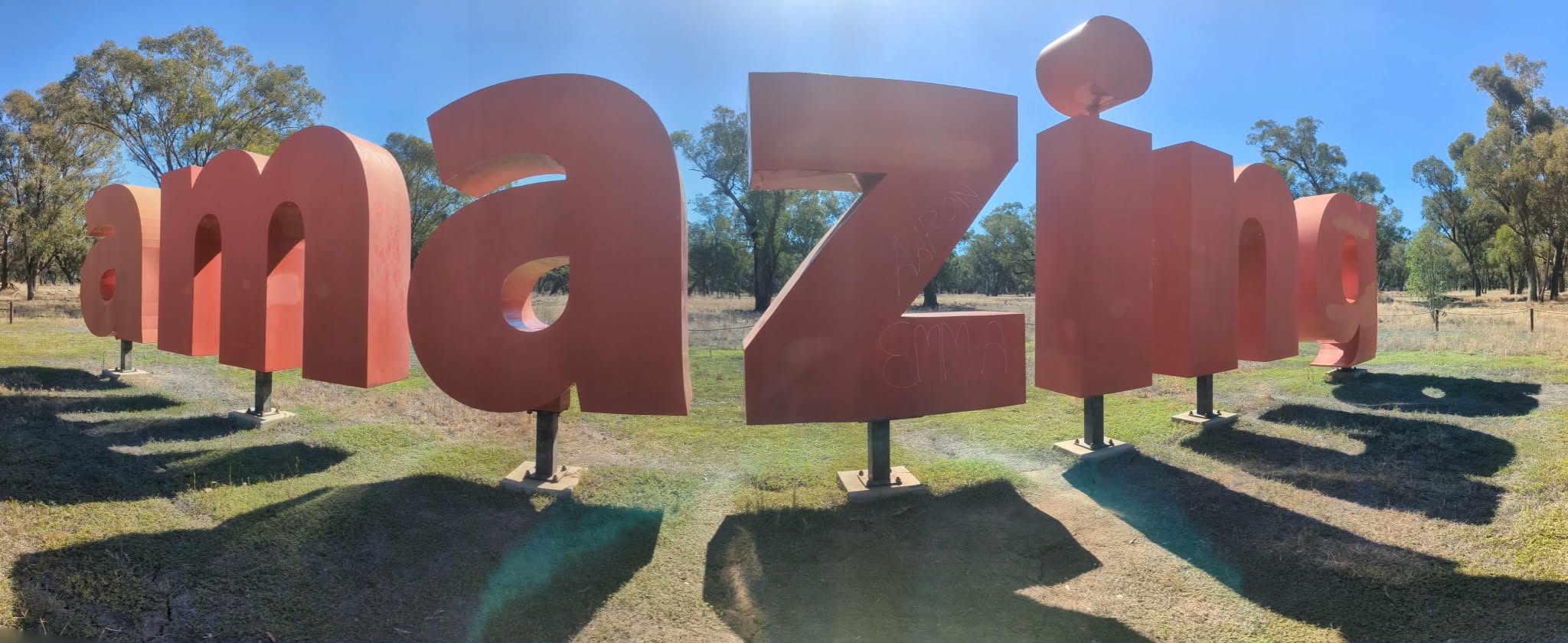
The same rules apply. Don’t overstay. Don’t claim it. Respect the place and it will return the favour.
FROM THE CENTRE TO THE DISH
The Gum Bend Water Ski Park
You can camp here as long as it’s not for an extended period. Caravaners are welcome (and I suspect encouraged), there are basic facilities and a bicycle path back into town.
That sentence reads like a rule, but it functions more like an invitation.
The Water Ski Park at Condobolin sits quietly on the edge of the Lachlan, neither grand nor apologetic. It doesn’t try to be a destination in the way glossy brochures define the term. It doesn’t pretend permanence either. You can stay, but not forever. You can pass through. You can pause. You can breathe. Then, eventually, you move on. Much like the river itself.
In a town shaped by long summers and longer memories, the park is not a luxury. It is infrastructure of a different sort, recreational, yes, but also psychological. A place where the land loosens its grip just enough to remind people that endurance doesn’t have to mean constant hardship.
This part of New South Wales understands drought not as an event, but as a background condition. Drought is not something you wait out; it is something you work around, plan for, absorb into daily decision-making. The grass yellows. The dust creeps. The river slows, sometimes to a murmur, sometimes to a stubborn chain of pools that refuse to give up entirely. And yet, here is this park, deliberately carved, maintained, and returned to year after year — asserting that life is allowed to include enjoyment.
In summer, its purpose is obvious. The relentless heat presses down early and lingers well into the evening. The water becomes refuge. Ski boats trace long arcs across the surface, their wakes briefly rewriting the river’s skin before it smooths itself again. Kids run barefoot on grass that survives largely through effort and attention. Families arrive with eskies and folding chairs, setting up temporary kingdoms that dissolve by nightfall. The soundscape is laughter, engines, cicadas, and the low, constant hum of heat.
But even then, the park isn’t careless. There’s a restraint built into it. Camping is permitted, but not indefinitely. This is not a place to disappear into. It’s a place to rest, reset, and rejoin the town. The bicycle path makes that explicit, a thin ribbon of connection that says you are not separate from Condobolin just because you’ve parked beside the river. You are still part of it. You still belong to its rhythms.
Caravaners understand this instinctively. They arrive dusty and curious, often surprised that such a facility exists at all. Many stay a night longer than planned. Some come back year after year, drawn less by spectacle than by permission, permission to exist quietly without explanation. The welcome is understated, but real. Encouraged, even, because towns like this know the value of movement. Visitors bring stories, money, novelty. Locals provide grounding, history, continuity. Neither works well without the other.
Winter changes the equation, but not the relevance.
The boats thin out. The water cools. The park becomes a different kind of commons. Morning fog drapes itself over the river like an unfinished thought. Walkers replace skiers. Fishermen stand in silence that feels earned rather than imposed. The grass toughens. Fires appear in drums and pits, small and controlled, held close against the cold. Conversations shorten but deepen. There is space to think here in winter, space to reflect without the distraction of movement.
The same rules apply. Don’t overstay. Don’t claim it. Respect the place and it will return the favour.
That balance, between use and restraint, mirrors the town itself. Condobolin has never been about excess. It has always been about function. About making what is available do more than expected. The Water Ski Park is not defiance against drought; it is adaptation. It doesn’t deny the land’s limits. It works within them, quietly, deliberately, year after year.
There’s something instructive in that.
Where other places might surrender recreational space when conditions tighten, this town doubles down on it. Not extravagantly. Just sufficiently. Because morale matters. Because community needs places that are not productive in the economic sense but are vital in every other way. Places where people gather without agenda. Where presence is enough.
In summer, the park absorbs the excess heat, energy, and restlessness. In winter, it holds stillness. In both seasons, it offers the same thing: continuity. Proof that life here is not only about surviving conditions, but about shaping moments within them.
The river will rise again. Or it won’t. Rain will come late, or all at once, or not at all. These are variables no one controls. But this stretch of land, this careful allowance for enjoyment, remains. Maintained. Understood. Passed down.
You can camp here, just not forever.
And perhaps that’s the point.
Author