

Making an Unordinary Accountant Chapter 13 - Where to Now

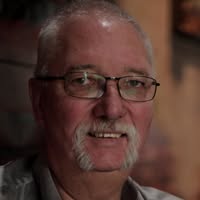
Jeff Banks

Maybe it’s enough to know that we showed up, leaned in, carried responsibility when it was heavy, let go when it was time, and lived in a way that didn’t require a scoreboard to validate it.

MAKING AN UNORDINARY ACCOUNTANT


Chapter 13 – Where to Now


Retirement, it turns out, is a dangerous word.


It implies a finish line. A plan. A sense that at some point you put the tools down, shut the door behind you, and step neatly into a quieter version of yourself.


That was never going to be us.


When Robyn and I first talked about “retirement,” what we really meant was movement. Not stopping, just loosening the tether. Fewer fixed points. More road ahead than diary entries behind. And to be clear, this wasn’t driven by lack of options.


There were grand plans. Plenty of them. And for once in our lives, we had the means to pursue almost any of them. The sale of the practice had provided a financial exhale we’d rarely allowed ourselves before. The sale of Karalta Crescent, at what was then a record price for the suburb, felt like validation, not just of timing, but of decades of decisions that had compounded quietly in the background.


If we’d wanted to build again, build big, build fast, we could have. If we’d wanted to chase scale, status, or yet another version of “what’s next,” the runway was there.


But something unexpected happened. Time in the caravan recalibrated us.


Not the Instagram version of caravanning, not sunsets and slogans, but the slow, repetitive rhythm of it. The packing and unpacking. The weather checks. The conversations that didn’t need to go anywhere. The realisation that days didn’t need to be productive to be valuable.


And then there was Macwood Road.


Time in the garden has a way of stripping the noise away. You plant something knowing full well it won’t care who you used to be or what you’ve achieved. It grows when it’s ready. Or it doesn’t. The feedback loop is honest. Immediate. Humbling.


Somewhere between the caravan parks and the garden beds, we realised something neither of us had articulated before:


This feels like enough, for now. Not forever. Not as a retreat. Just as a pause that didn’t feel like failure or avoidance. A season where ambition didn’t need to be fed daily to stay alive. Where momentum could exist without acceleration.


That was unfamiliar territory for both of us.


We’d spent most of our lives equating motion with worth. Progress with expansion. Success with the next thing already underway before the current one had settled.


But here we were, with resources, options, credibility, and no urgency to prove anything.


So we loosened the tether. Not because we were done. But because, for the first time, we trusted that standing still, briefly, wouldn’t cause everything to fall apart. And in that space, we discovered that retirement, at least for us, was never about what we were stepping away from.


It was about giving ourselves permission to decide, slowly, what was actually worth stepping towards.


So we packed up caravans, aligned calendars with two other families just as mad as we were, and pointed ourselves around Australia for ninety days.


On paper, it sounded glorious. In practice, it was relentless.


Australia doesn’t reveal itself on a timetable. You don’t see this country in three months, you skim it. You drive past stories instead of sitting with them. Towns blur into fuel stops. Sunrises are admired through windscreens. Conversations are cut short because there’s another 600 kilometres to cover before dark.


It was freedom, yes. But it was hurried freedom. And even as the wheels turned, the old gravity refused to let go.


Robyn was quietly building something of her own, Food Labelling Experts, a business that showcased her precision, her integrity, and a skillset that had always sat slightly in the shadow of mine. Watching that grow was one of the true joys of that trip. Not because it was easy, but because it was hers. Clean. Purposeful. Grounded in real expertise.


At the same time, the cracks at MW Lomax were widening. Clients weren’t leaving because they wanted to. They were leaving because they had nowhere else to go. Systems were creaking. Promises were thinning. And people who had trusted us for years were quietly asking the question they didn’t want to ask out loud:


If not there… then where? So somewhere between roadhouses and caravan parks, another accounting practice was born, not as a strategy, but as an act of responsibility.


Again. Add to that the curious vanity project that became The Oz Jeff Banks, a half-serious, half-stubborn attempt to push a certain British fashion designer off the front page of Google. Equal parts humour and ego. Proof, perhaps, that even when I claimed to be slowing down, the urge to build something hadn’t dulled at all.


That first lap around Australia ended not with a sense of completion, but with a question mark.


So we went again. The second trip was meant to be different. Slower. Softer. Less frantic.


Then COVID arrived. Borders closed. Plans evaporated. Communities revealed both their generosity and their fragility. We saw people pull together, and pull shutters down. We saw how quickly certainty disappears, and how adaptable humans become when they have no other choice.


Ironically, it was during that more “relaxed” trip that the real problem surfaced. Neither of us could say no.


Every conversation became a possibility. Every idea felt like something that should be helped. And out of that well-intentioned chaos came Property Portfolio Solutions, another partnership, another vision, another belief that experience plus goodwill would be enough to make it balanced.


For a while, it was. Until it wasn’t.


Because partnerships don’t fail in explosions. They fail in silences. In small imbalances ignored too long. In effort that stops flowing both ways. In assumptions that no one wants to challenge because everyone is tired.


By the time you realise it’s one-sided, you’ve usually been carrying it alone for quite a while.And that, more than anything, became the quiet lesson of “retirement” the Jeff and Robyn way.


We didn’t retire from work.n We retired from pretending that work would ever stop finding us.


What changed wasn’t the activity, it was the filter.


We learned, slowly and sometimes painfully, that movement without intention just creates more noise. That freedom without boundaries breeds obligation. And that saying yes too often isn’t generosity, it’s avoidance.


So where to now? Not nowhere. Just somewhere chosen more carefully.


Retirement, as it turns out, isn’t about stepping back. It’s about deciding, finally, which fires you’re prepared to keep feeding, and which ones you’re willing to let go out, even if you started them yourself.


So I offer a question as we contemplate our navels – Does reciprocity exist?


I’ve come to wonder, as the noise quietens and the urgency fades, whether reciprocity truly exists at all, at least in the way we’re taught to expect it.


We grow up with a simple equation in our heads: Put the work in, and something will come back. Study hard. Work harder. Show up. Care. Sacrifice. And in time, life will return the favour.


But life, I’ve learned, doesn’t run a ledger.


Robyn and I have poured ourselves into many things, businesses, partnerships, communities, committees, causes, clients, children. We’ve invested time we didn’t have, energy we probably should have conserved, and belief long after logic suggested we should stop.


If reciprocity exists in a transactional sense, then the return is uneven at best.


Some efforts bloomed spectacularly. Others dissolved quietly. Some people stayed. Others moved on without a backward glance. Some contributions were acknowledged. Many were simply absorbed and forgotten.


And yet, when I look back, I don’t feel cheated, even if I add up the bad debts we write off over the years. That’s the part that unsettles the equation.


If the true measure of a life were the balance of what we gave versus what we received, the numbers would never reconcile cleanly. The inputs were emotional, invisible, and often immeasurable. The outputs, when they came, were rarely comparable.


So what do we count? Superannuation balances? Property portfolios? Business exits? Awards, titles, plaques on walls?


They’re neat. They’re tangible. They make conversations easier. They fit on paper.


But they’ve never told the whole story.


No spreadsheet captures the nights spent worrying about staff. No valuation model measures the quiet pride of watching your children become good humans. No award quantifies the relief a client feels when someone finally listens to them properly. And perhaps that’s the point.


Maybe reciprocity doesn’t arrive as a return for what we give, but as a consequence of having given. Not payback. Not reward. But shape. The shape of who you become. The shape of your days. The shape of your relationships.


A life well lived may not come with a receipt. It may not even come with recognition. It certainly doesn’t guarantee fairness.


But it does something else. It leaves you able to sit still, in a caravan, in a garden, at a kitchen table, and feel, quietly and without needing to justify it, that the effort wasn’t wasted.


That the giving mattered, even when it wasn’t returned in kind.


So if this book ends without a neat moral or a triumphant summation, that feels appropriate.


Because maybe the final answer isn’t found in what came back at all.


Maybe it’s enough to know that we showed up, leaned in, carried responsibility when it was heavy, let go when it was time, and lived in a way that didn’t require a scoreboard to validate it.


And maybe, just maybe, that, in itself, is reciprocity enough.

Author

Menu