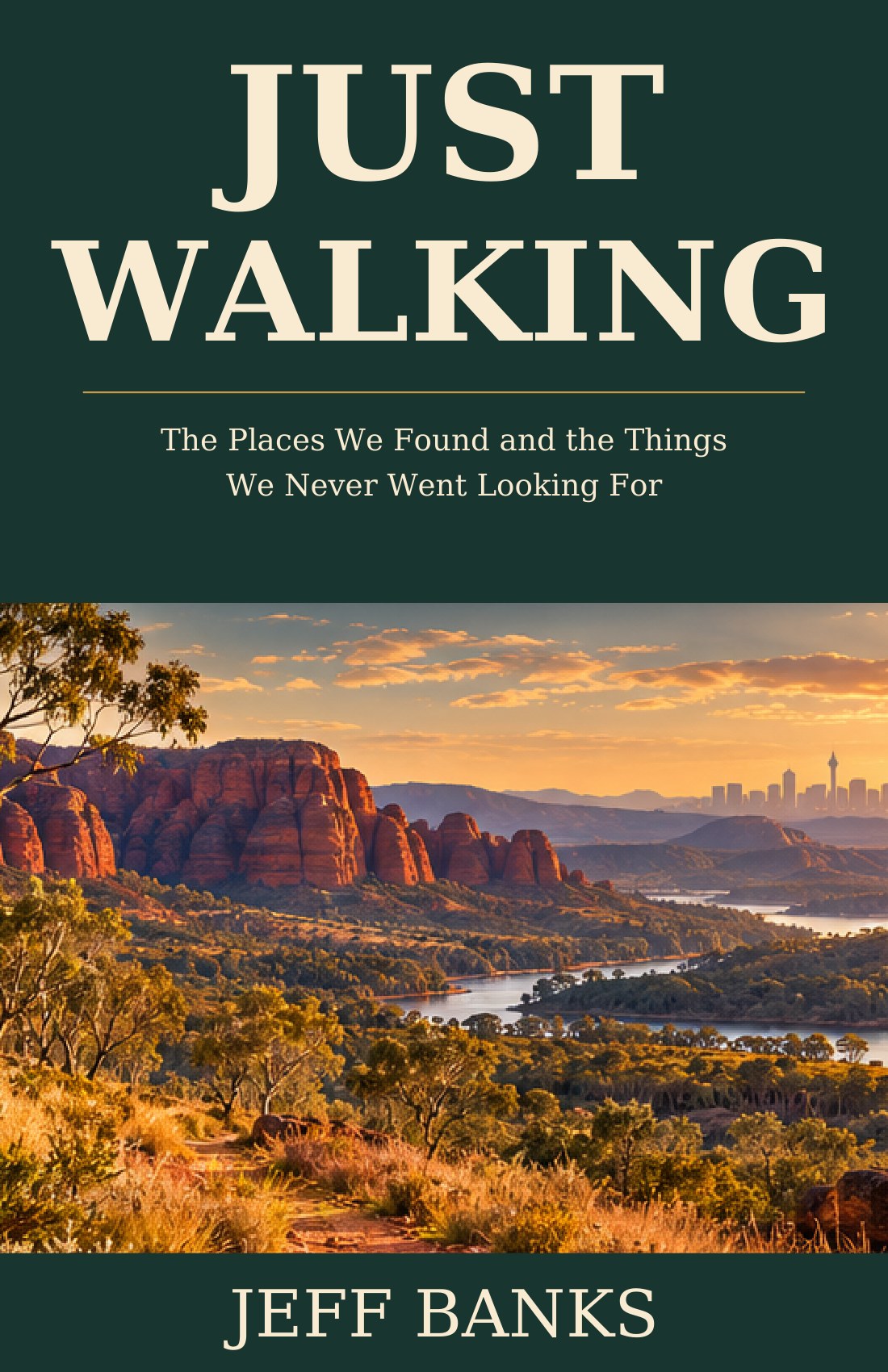
JUST WALKING - Chapter 14 - What the Camera Left Out

JUST WALKING - Chapter 14 - What the Camera Left Out | Travelling Around Australia with Jeff Banks

I would happily return to Ubirr and spend longer with the paintings and the view. I suspect I would take more photographs, discover the same limitations in them and eventually be persuaded down by the prospect of something cold to drink. At Cahills Crossing I would watch the water with the benefit of having read my own account again, particularly the moment when the crocodile disappeared and another fisherman stepped forward. The picture I carry of Kakadu has room for all of it, although occasionally I need the words written at the time to show me what has slipped beyond the edge.

JUST WAKING

The Places We Found and the Things We Never Went Looking For

Chapter 14 – What the Camera Left Out

By the time we reached Cahills Crossing, we had spent part of the day looking at paintings that deserved far more time than we could give them and standing above a landscape I could happily have watched for the rest of the afternoon. We had also stopped for cold drinks and begun examining the photographs, already discovering that what had filled our vision at Ubirr looked rather less expansive on a phone. Now we were watching a man cast a fishing lure over a crocodile. The line caught, the animal moved away and the reel began screaming, which seemed a fairly comprehensive answer to any question about whether there were crocodiles in the river. When the lure came free and the crocodile submerged, the fishing continued. Apparently, once you could no longer see it, there was room for another cast.

Kakadu had been in my imagination long before we drove into it. Like plenty of Australians, I had watched Crocodile Dundee, enjoyed Hogan’s humour and remembered the country in which Mick introduced Sue to his particular understanding of the world. The landscape was part of the attraction, somewhere you could recognise without having been there, although recognition turned out to be a modest preparation for standing in it. The film also provided an agreeable arrangement for dealing with danger: something alarming happened, Mick took charge and we could settle back into the story. Beside the East Alligator River, watching people fish within reach of animals we had just seen disappear into the water, I found that arrangement considerably harder to rely upon.

Our introduction to the walking had come the previous day at Gunlom. Robyn and I were both still carrying the remnants of head colds, and she decided that a difficult climb was something she could comfortably leave to the rest of us. I headed off with our travelling companions, equipped with sturdy shoes, a long-sleeved fishing shirt, sandwiches and water. We had been told the access road required four-wheel drive and the walk would take some effort, so there was enough information available to suggest this would be more than a stroll from the car park. There was also the distance: about ninety kilometres back to the turnoff, followed by another thirty-seven kilometres into the falls, which gave the driver plenty of time to consider whether he had prepared everything properly.

Somewhere around the turnoff, the fuel gauge began receiving more attention than I had originally intended to give it. The Cruiser’s estimate of its remaining range reflected the work it had been doing towing the caravan, whereas today we had left that considerable contribution to fuel consumption behind. On that basis, I calculated that we ought to have enough to get there and return. It was a reasonable argument, and I continued making it to myself as we drove, without inviting the others to participate in the discussion. There are occasions when being the driver involves quietly carrying a little more information than the passengers, although ideally that information should not concern whether everyone will be coming home in the vehicle.

The road itself did little to justify the more adventurous descriptions we had heard. It was wide and corrugated, with dust thickening whenever we caught another vehicle or someone passed in the opposite direction, but caravans were parked at campsites along the way and at Gunlom itself. Early creek crossings were dry; closer to the falls there was water, and on arrival we found green grass, sprinklers and trees offering shade around the picnic area. Above them, the falls were reduced to a trickle down the rock face. The setting gave a much clearer impression of the volume of water that might come over in another season than of anything likely to wash us away that morning.

We could see the route climbing beside the falls, and its beginning was encouraging. A broad, formed path led upwards, with stairs helping us around corners and onto the next section, while the sound of workmen farther up suggested that somebody was continuing to improve the arrangements. We learnt that the work was nearing completion, which sounded promising until we reached the point where completion was still required. About halfway up, the generous walking surface gave way to a rough, rocky ascent that demanded a closer relationship between eyes and feet. The sign below had described the walk as difficult, and any suspicion that it had been written by an unnecessarily cautious person was soon withdrawn. We picked our way upwards, pausing regularly to restore enough breath to tackle the next bit.

It was in that rough section that I lost my balance. I grabbed the guide rope, but it did little to prevent the fall, and I hit the ground hard on my elbow before beginning to roll. Experience with horses had taught me something about the futility of stiffening every muscle when a fall was already underway, but there was a limit to how much I wanted to leave to events. I realised I had gone beneath the rope and was now on the side where further movement would be dangerous. A rock and a sapling gave me something to hold, and I managed to arrest the roll. My elbow hurt, my pride had suffered and there was enough evidence available to appreciate that the outcome could have been considerably worse. We eventually continued, although the track now had my undivided attention.

At the top, the pools and the view explained the effort people were prepared to make. Clear water lay before the drop, with country stretching away beyond it, and the camera immediately acquired more work than it could reasonably perform. This was one of Forbsy’s long-held ambitions, and having reached the place, he intended getting into the water. A conversation with some children established that it was cold, which encouraged me to position the camera where his entry could be recorded properly. He first stopped to help a young child wash her hands, then examined his options from a ledge before committing himself. I captured the immersion in slow motion, giving a significant personal achievement the time it deserved and providing the rest of us with something to enjoy again later.

There was plenty to photograph without relying upon Forbsy. Two wedge-tailed eagles were riding the updrafts, and I managed a few shots before they moved beyond the frame. Later, as I attempted a wider photograph across the ledge and the country beyond, one entered the picture at precisely the right moment. After all the positioning, adjustment and consideration that can go into taking a photograph, a bird simply going about its business had improved the composition for me. We wandered between vantage points, looking across the water and out over the country, with the rough ascent temporarily displaced by the reasons we had made it.

Coming down required renewed concentration, particularly as my hiking boots had done little to establish themselves as dependable equipment on that surface. We passed a couple wearing thongs, which invited speculation about how they would manage farther up, and at the bottom encountered a family group preparing to climb. There was a baby in a sling, along with someone carrying an esky and an inflatable toy. Having recently found the transport of my own body sufficiently demanding, I was interested in the additional challenge they were proposing. Their preparations continued while we headed towards the swimming area below the falls, initially following Forbsy along a track that brought us to the water without bringing us to the beach where everyone else appeared to be enjoying it.

Once we found the intended approach, the signs provided further material for consideration. One warned about crocodiles, while another warned against jumping from rocks and logs into the water, leaving a visitor to assemble the advice into a satisfactory plan. At the beach, adults stood waist deep while little fish picked at their feet, and we were told there were freshwater crocodiles in the deeper part of the pool. Silver Leader pointed out floating marker buoys and explained what, according to the account he had heard, teeth marks in them would mean for the detection of an arriving saltwater crocodile. I recorded these things as part of the conversation, with no particular qualification for assessing the effectiveness of the system. The people in the water appeared comfortable with the arrangements, and the picnic area remained a pleasant place to eat our sandwiches.

It was also there that we heard the story that the crocodile attack in Crocodile Dundee had been filmed at Gunlom. The place looked convincing, and in my original account I described the connection as a rumour. Gunlom certainly belongs to the film: it supplied the setting called Echo Lake, including the fishing and swimming scenes. The attack itself, however, was filmed at Girraween Lagoon outside Darwin. Looking back, I can see how easily the separate images settled into one remembered location. There was a pool in front of us, a familiar film in mind and someone supplying the connection between them, which was quite enough to give the memory a shape it retained long after the conversation was over.

The return drive supplied donkeys, brumbies and several reasons to stop for photographs, with the fuel gauge continuing its quieter contribution to the afternoon. We reached Cooinda with the warning light having appeared just before our arrival, vindicating my calculations by a margin I had no wish to investigate further. The first bowser I approached was out of order, which briefly made the whole exercise seem less satisfactorily concluded than I had hoped, but the other side worked. Once the Cruiser had been replenished, there was time for a swim and the usual business of settling back into camp. Gunlom could begin its transition into the collection of places we had been pleased to visit, although my elbow retained a more immediate record of the day.

The following morning, Robyn was with us for a dawn cruise on Yellow Water. Birds, billabongs, rising light and crocodiles gave the camera another busy start, including animals close enough to the boat to remove any disappointment about having brought viewing equipment for distant sightings. After a substantial breakfast back at Cooinda, I asked for a little time to shower and recharge the phone before we set off again. Both of us had been working steadily through the morning, and the phone’s nearly two hundred photographs had taken a toll on its reserves. Ubirr lay beyond Jabiru, near Cahills Crossing, and there were rock formations and waterholes to interrupt the journey once we were on our way. Robyn spotted brumbies too, although that information reached the driver after the opportunity to stop had passed.

Silver Leader and Forbsy had visited Ubirr before and had said enough about the rock art to make us keen to see it, without giving us a detailed preview. We followed a well-made path into the galleries and came upon a ranger speaking to a group. She was happy for us to listen, and we stayed for a while as she shared stories and recollections of growing up in the area. The paintings held our attention in their own right, while hearing someone speak about the place added something we could not have gathered by simply walking through. We had come carrying images from a film made within our own lifetimes, and here was evidence of a relationship with the country that extended far beyond that brief introduction. It gave the walk a depth that recognising a location on a screen could never supply by itself.

Beyond the galleries, we continued upwards. After the previous day, I was attentive to any assurance that this ascent would be easier, and Silver Leader’s assessment proved reliable. There was a defined route, with markers where they were needed, and Robyn was managing it well. When we reached the lookout, the view across the Nadab floodplain brought the remembered film into focus, but only for a moment before the rest of the country demanded its share of attention. I had attached an uncertain creek name to the scene in my earlier writing, yet what I recognised was the sweep of landscape where Dundee introduces Sue to his country. Standing there gave us the freedom to keep looking after the remembered camera movement had finished.

That was the part for which the film had not prepared me. Turn in another direction and there were more escarpments, more bush, more water and another arrangement of country deserving the same attention as the view we had come to recognise. Fires were burning in places, smoke was rising, and billabongs still held water this far into the dry season. We could see and hear geese, while every attempt to choose a photograph seemed to exclude something equally worth keeping. I tried panoramas, closer views and pictures of people standing above it all, but the results were pieces of an experience that required us to turn our heads and give it time. The familiar film vista occupied only part of what was available, and I could have stayed there for hours exploring the rest without moving very far at all.

Eventually, heat and the promise of cold drinks encouraged us down. At the nearby shop we ordered mango smoothies, lime and coriander crushes and, for me, an iced chocolate, then followed Forbsy outside because he had identified a pleasant breeze around the tables. The breeze dropped as soon as we settled, but the drinks arrived and we stayed, examining photographs and talking about the view. It was an ordinary, agreeable interval after something remarkable, the sort of pause that belongs to travelling together as much as the destination itself. Refreshed, we made the short journey to Cahills Crossing, where I expected to see the famous fishing spot and whatever crocodiles happened to be visible from the viewing area.

Someone coming away from the crossing indicated there were none to see, an assessment difficult to reconcile with the large animal lying only a few metres from the causeway when we arrived. There was another on the far bank and more downstream, giving us plenty to examine before anyone began fishing. From the viewing area, we could follow their movements as they left resting places, entered the river and resurfaced elsewhere. Water that had formed part of a broad and beautiful panorama at Ubirr now required a more particular kind of attention. Each disappearance left a gap in our knowledge, and the apparently empty space above it provided no useful reassurance about what remained beneath.

The first fisherman who approached noticed the crocodile beside the crossing and checked his step. For a moment it appeared that the animal’s presence might settle the question of where to fish, but the husband and wife who arrived afterwards were more determined to proceed. We watched the casts, the lure passing over the crocodile and the line running as it moved away. Once the lure came free and the animal submerged, the fishing resumed, with the first man joining them on the apparently available causeway. Other crocodiles continued changing position around the river, including a large one that entered from the opposite bank, moved towards the crossing and eventually returned to land nearer the road. Any comfortable account of where everything was had to be revised almost as soon as it was formed.

Robyn could not keep watching. The fishermen were snagging lures and moving closer to retrieve them, while we could see enough of the animals to appreciate how much we could no longer see. We eventually returned to the car park, where a family from Western Australia was unloading fishing equipment. Two young boys had rods, and a pram suggested there was an even younger member still to emerge. We left without saying anything, and my original account records the discomfort of that decision. There was no incident for us to describe afterwards, no rescue or attack that completed the scene; there were people preparing to fish and our knowledge of the crocodiles they were approaching.

The crossing did not diminish what we had seen at Ubirr, but it occupied our attention with something very different. Among the paintings, we had listened and looked, and above the floodplain we had been able to let our eyes travel across country without needing to account for every movement in it. Here we followed individual animals and measured their proximity to people, then lost track of them as they submerged. The film’s danger had a familiar resolution, with Mick close enough to intervene and the story ready to continue once Sue was safe. We drove away from the crossing without knowing what the rest of that afternoon would bring for the people who remained, and leaving gave an ending only to our part in watching.

Years later, the pleasant parts of Kakadu are readily available. I can return to Gunlom through the pools, Forbsy entering the cold water and the eagle arriving in the photograph, then to Ubirr through the paintings and that extraordinary freedom to turn around and discover another view. The original writing brings back the less comfortable details with equal authority: the roll beneath the guide rope, the fuel calculations, the conversation beside the swimming area and Robyn reaching the limit of what she could watch at Cahills Crossing. They have not disappeared from the journey, but they do not always come forward as quickly as the things we were delighted to have seen. A photograph is particularly accommodating in that respect, preserving its chosen moment while leaving the concerns around it outside the frame.

Near the end of The American President, Andrew Shepherd speaks of people who “remember with longing an easier time”. He is attacking the use of nostalgia in political persuasion, but the phrase has stayed with me because I recognise something of the habit in myself. I can look back upon an earlier journey and find companionship, freedom and familiar pleasures waiting there, while the original account contains a man trying to stop himself rolling farther down a rough track and a woman unable to watch another cast beside a crocodile. The years have given us the comfort of knowing we came home, and that knowledge changes the experience of remembering what, at the time, was still unfolding.

I would happily return to Ubirr and spend longer with the paintings and the view. I suspect I would take more photographs, discover the same limitations in them and eventually be persuaded down by the prospect of something cold to drink. At Cahills Crossing I would watch the water with the benefit of having read my own account again, particularly the moment when the crocodile disappeared and another fisherman stepped forward. The picture I carry of Kakadu has room for all of it, although occasionally I need the words written at the time to show me what has slipped beyond the edge.

Author

Menu