
How Did We Get Here Chapter 2 - Raging Roads

How Did We Get Here Chapter 2 - Raging Roads | Travelling Around Australia with Jeff Banks

The logical bystander does not arrive with solutions that promise perfection, but rather with questions that invite a different way of thinking. What would it take for the merging lane to function as intended, not through enforcement, but through a shared understanding that flow matters more than position? What would it take to approach overtaking as a considered decision rather than a reflex, recognising that being in front is not the same as making progress? What would it take to treat larger vehicles not as obstacles to be overcome, but as participants with constraints that deserve acknowledgment?

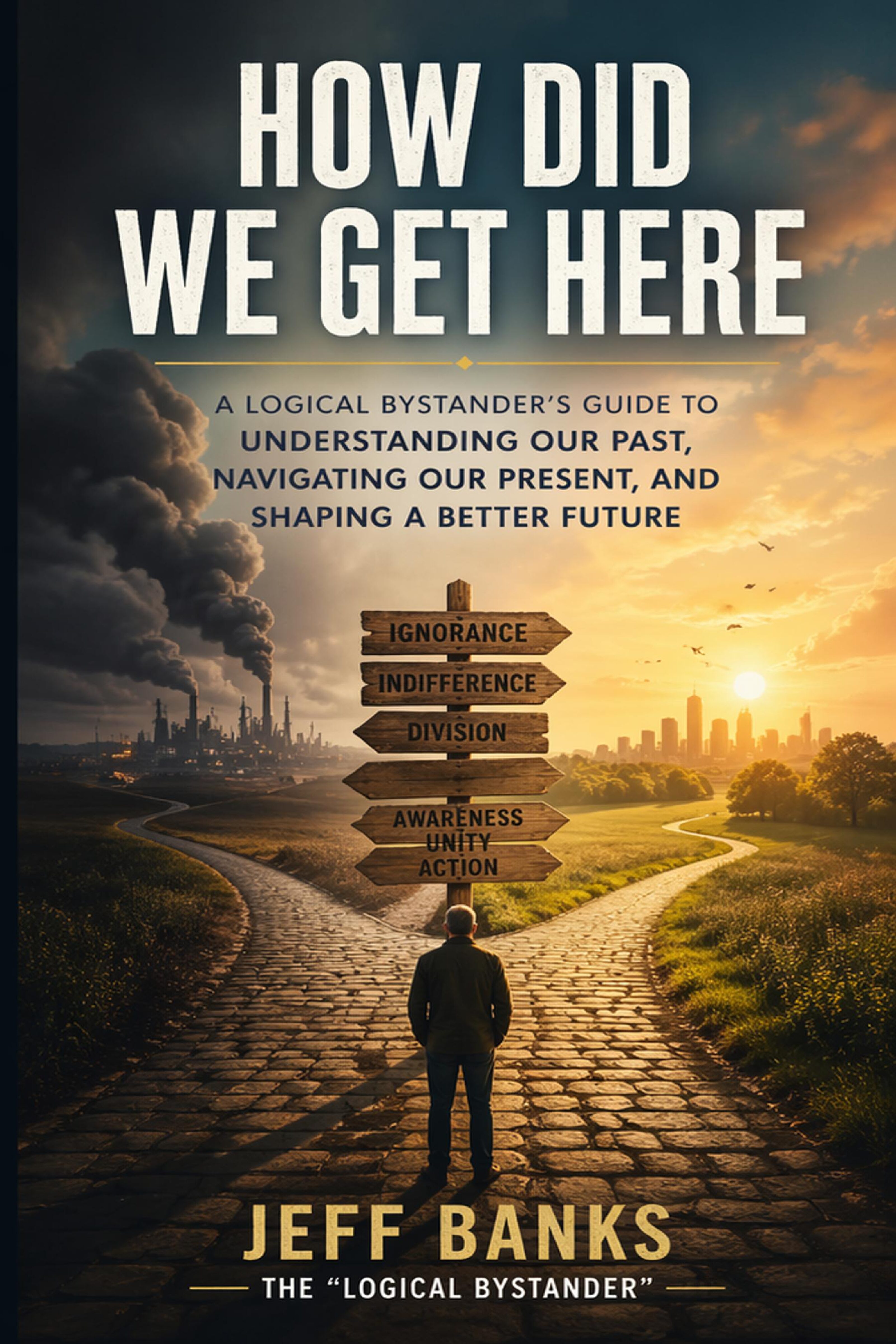
HOW DID WE GET HERE


Chapter 2 – Raging Roads


I think I have to start with everyone’s biggest bugbear, getting from A to B on our roads.


It’s not just the state of the roads that creates the angst but the eternal struggle with “the other driver” that creates most of the problems we see as we try to get from Ghent to Aix. Let me talk in terms of a logical bystander. Someone looking from the outside knowing they’ve done many of these things themselves but becoming amazed every time we see someone else do it. 


It begins, as most things do, without any sense of occasion. A stretch of bitumen, a line of cars, a destination that feels more urgent than it probably is, and a day that has already taken shape before the engine turns over. Time has been allocated, or more accurately misallocated, and the road becomes the place where that miscalculation is expected to be corrected. No one sets out with the intention of reclaiming ten lost minutes through a series of questionable decisions, yet that quiet expectation sits beneath the surface as soon as the wheels begin to move.


The first signal is subtle, almost polite in its presentation. A merging lane appears, the painted lines narrowing two streams of traffic into one, an arrangement that relies not on brilliance but on cooperation. The signage is clear enough, the concept almost childlike in its simplicity. One car, then another, a rhythm that, when followed, allows the system to function with a surprising degree of efficiency. It is the so-called zipper move, something taught early, understood easily, and proven repeatedly to work when applied without interpretation. Each driver yields a fraction, takes a fraction, and the flow continues with barely a pause, the system holding together through nothing more complicated than shared understanding.


Two lanes, continuing as one, and where three lanes commenced, all can proceed at a similar speed, even though the merged lanes potentially now have double the traffic.


Yet something shifts as vehicles approach that narrowing point, and it is not announced, it simply occurs. The zipper becomes something else entirely, a contest rather than a sequence, where the idea of “one each” is replaced by “one more if possible.” The line is no longer a queue to be respected but an opportunity to be improved upon, as though arriving at the merge in a particular position somehow justifies holding that position regardless of what the system requires. The logic of cooperation gives way to the instinct of acquisition, and the rhythm begins to fracture.


There is a particular moment where this becomes visible. A vehicle accelerates along the closing lane, not to find its place in the sequence, but to redefine it. The gap that would have been available two car lengths earlier is ignored in favour of a later insertion, one that feels like a small victory to the driver executing it. The indicator flicks on, sometimes late, sometimes merely as punctuation, and the merge is forced rather than negotiated. It is not the act itself that stands out, but the manner in which it is done, the quiet assertion that the established order is optional when personal timing is involved.


And then comes the wave.


It is not the wave of gratitude that acknowledges a shared understanding, but something altogether different, a small flick of the hand that carries with it an odd sense of justification. It reads less as “thank you” and more as “that’s how it had to be,” a gesture that attempts to soften the intrusion while simultaneously confirming it. There is an implication, subtle but present, that the driver behind should accept the manoeuvre not as a disruption, but as an inevitability, as though the sequence itself was flawed until corrected by this late arrival.


It is here that the farce begins to take shape, not in any dramatic way, but in the quiet contradiction of it all. The same driver who bypasses the zipper logic, who inserts themselves out of sequence, will often feel aggrieved when the favour is not immediately returned elsewhere. The expectation of accommodation runs in one direction, justified internally by urgency, timing, or circumstance, yet rarely extended outward with the same generosity.


In contrast, there remains a different kind of wave, one that appears almost modest by comparison. When the zipper is followed, when a space is offered and taken as intended, there is often a brief acknowledgment, a raised hand, a nod that lasts no more than a second. It does not seek to justify anything because nothing has been imposed. It simply recognises that, for a moment, common sense prevailed, that two strangers participated in something that worked because both allowed it to.


That small gesture carries more weight than it appears to. It reinforces the idea that cooperation is not only possible, but normal, that the system functions best when no one tries to outsmart it. It is a quiet affirmation that the road, for all its complexity, does not require brilliance to navigate effectively, only a willingness to play a part in something larger than the individual journey.


And yet, the tension between these two approaches remains constant. The zipper exists as a known solution, a shared piece of knowledge that should remove ambiguity, yet the “I must be there first” mentality continues to find its way into the gaps, reshaping the moment to suit itself. The difference between the two is not found in skill or understanding, but in choice, in whether the driver approaching the merge sees themselves as part of the flow or separate from it.


That choice, made in seconds and often without conscious thought, is where the shift occurs. It is where a system designed for ease becomes something more strained, where cooperation is replaced by negotiation, and where a simple merging lane begins to tell a much larger story about how easily shared understanding can give way to individual interpretation.


Acceleration replaces patience, and gaps that were once perfectly adequate are suddenly deemed insufficient. The act of merging becomes less about integration and more about position, as though the outcome of the day hinges on whether a vehicle is ahead or behind at that precise moment. One car edges forward, another closes the space, and what should have been a fluid movement turns into a negotiation conducted at speed, resolved through inches rather than agreement. Indicators flash in a manner that feels less like a request and more like a statement of intent, and somewhere in that exchange, logic quietly excuses itself.

From there, the pattern does not escalate dramatically; it simply continues, gathering small reinforcements along the way. The larger vehicles enter the scene, the four-wheel drives, the utes, the ones that sit higher and carry with them an unspoken sense of presence, especially it seems to the tradies. Their arrival alone seems to alter behaviour, not because of anything explicitly done, but because of what is implied. Tailgating becomes less a reaction and more a form of communication, the space between vehicles compressed into something symbolic rather than practical, a narrowing that says more about intent than it does about distance.


Within that narrowing sits a curious fixation, the need to be ahead, even when “ahead” offers nothing more than a different view of the same limitation. The car in front remains unchanged in speed and position, yet the vehicle behind behaves as though proximity alone might alter the outcome. The gap closes, not to create opportunity, but to reinforce position, as if reducing the distance between bumpers somehow shortens the journey itself. It is a pursuit without a prize, a quiet insistence that being closer equates to being further along.


There is a subtle illusion at work here, one that feels convincing in the moment but rarely stands up to examination. The driver who presses forward, who reduces the buffer to the bare minimum, experiences a sense of progress that is largely imagined. The road ahead has not opened, the pace has not increased, and the destination has not moved any closer in any meaningful way. What has changed is position within the line, a shift so small it carries no measurable benefit, yet it is pursued with a determination that suggests otherwise.


It becomes a form of compressed impatience, where time is measured not in minutes saved, but in metres gained. The presence of the car in front is treated as a temporary inconvenience rather than a constant, and the act of closing the gap becomes a way of expressing dissatisfaction with that reality. Yet the contradiction remains, because the closer the following vehicle sits, the less room there is to respond, to adjust, to do anything other than mirror the behaviour of the car ahead.


The effect, when viewed across multiple vehicles, is almost architectural. Each driver builds a smaller and smaller margin, stacking intention against limitation, until the line itself becomes rigid. Movement is no longer fluid but constrained, dictated entirely by the lead vehicle, with no capacity for independent adjustment. The desire to be ahead, to gain some undefined advantage, results instead in a collective loss of flexibility, where everyone is bound more tightly to the same outcome.


What makes it more perplexing is that the definition of “ahead” in this context is inherently limited. There is no open road to claim, no clear path that emerges from the act of closing the gap. Being ahead, in practical terms, simply means being one position further forward in the same queue, still subject to the same speed, the same conditions, the same eventual stopping point. The victory, if it can be called that, is entirely positional and entirely temporary.


And yet, the behaviour persists, not as an exception, but as a pattern. It suggests that the need to be ahead is less about progress and more about perception, about the internal narrative that equates forward movement with control, even when that movement is constrained by factors that cannot be influenced. The road becomes a place where that narrative plays out repeatedly, where drivers seek small confirmations of progress in situations that offer none.


From the perspective of the logical bystander, the question is not why drivers want to move forward, as that is both natural and expected, but why the definition of forward becomes so narrowly focused that it loses its meaning. If being ahead does not change the outcome, does not reduce the time, does not improve the journey, then what is actually being gained?


Perhaps the answer lies not in the road itself, but in the way the journey is framed. When the focus shifts from the broader movement to the immediate position, when the horizon is replaced by the bumper in front, the concept of progress becomes compressed into something almost abstract. The act of closing the gap feels like advancement, even when it is not, and the cost of that perception is paid in reduced safety, increased tension, and a system that becomes less adaptable with every metre surrendered.


And so the narrowing continues, not because it must, but because it is chosen, again and again, in small, almost unnoticeable increments. Each decision feels insignificant on its own, yet together they create a pattern that defines the experience for everyone involved. The road does not demand this behaviour, but it reveals it, offering a space where the difference between actual progress and perceived progress becomes increasingly difficult to ignore..


It is here that the road begins to resemble something slightly theatrical, though no one would describe it that way in the moment. A vehicle designed for terrain and towing adopts the posture of urgency, pressing against the rear of a sedan that has nowhere to go. The speed limit is observed, the conditions are clear, yet the expectation remains that the car in front should somehow create space where none exists. The contradiction is not acknowledged because it is not examined, and without examination, it simply becomes part of the accepted rhythm.


Running alongside that moment is another interpretation of the same stretch of road, one that is rarely spoken aloud but widely understood. The outside lane, in theory, is there for overtaking, a temporary space to complete a manoeuvre before returning to the flow. In practice, it is often treated as something else entirely, a lane reserved, by assumption if not by law, for those prepared to stretch beyond the posted limit. It becomes a corridor of implied permission, where speed is not only expected but required to justify being there at all.


Within that unspoken agreement sits a quiet pressure. Those who enter the outside lane without the intention to exceed the limit find themselves in an awkward position, not obstructing in any formal sense, yet perceived to be doing exactly that. The vehicle behind arrives quickly, often closing the gap with a familiarity that suggests this pattern has been played out countless times before. The expectation is immediate and rarely subtle. If the lane is occupied, it should be used in a way that aligns with its unofficial purpose, and if it is not, then it should be vacated.


What emerges is a layered contradiction that sits comfortably within the flow. The driver observing the speed limit in the overtaking lane is, in a strict sense, compliant, yet within the rhythm of the road, appears almost out of place. The driver exceeding that limit is, in a strict sense, non-compliant, yet within that same rhythm, appears to be behaving as expected. The inversion is complete, and because it is rarely questioned, it becomes normalised.


This is where the theatrical quality deepens. Each participant understands the script without ever having agreed to it. The outside lane carries an expectation of pace that exceeds what is written, and those who do not meet that expectation are subtly, and sometimes not so subtly, encouraged to reconsider their position. Tailgating, flashing lights, the gradual closing of distance, all become part of the language used to reinforce that expectation.


For the driver in front, the decision becomes less about legality and more about interpretation. Remain in the lane, adhering to the limit, and be perceived as an obstacle, or move aside and concede that the lane serves a purpose beyond its formal definition. Neither option sits entirely comfortably, because both require an adjustment to a system that appears to operate on two sets of rules simultaneously.


From the perspective of the logical bystander, the question is not whether one interpretation is right and the other wrong, but how both came to coexist so seamlessly. The road, governed by clear and consistent rules, has developed an overlay of behaviour that redefines those rules in practice. The outside lane is no longer just for overtaking; it has become, in the collective mind, a place where different expectations apply.


At the centre of that disconnect sits a rule so simple it barely warrants explanation, and yet it is one of the most consistently ignored. Keep to the left. Not as a suggestion, not as a flexible guideline, but as the foundation upon which the rest of the system is built. It is the rule that allows overtaking lanes to function, that creates predictability, that ensures each driver understands not only their position, but the expectations that come with it.


And still, it drifts.


Vehicles settle into the right-hand lane as though it were a default setting rather than a temporary one. The justification is rarely explicit, but it is often implied. The speed feels appropriate, the road ahead appears clear, and so the lane is occupied, not for the purpose of overtaking, but simply because it is there. The distinction between using the lane and living in it fades quietly, replaced by a habit that feels reasonable in isolation but problematic in aggregate.


What follows is not immediate disruption, but a slow erosion of structure. The overtaking lane, designed as a relief valve, becomes part of the main flow, and the left lane, intended as the default, begins to carry an uneven share of the load. Drivers approaching from behind are left to interpret a situation that should require no interpretation at all. Is the vehicle ahead preparing to overtake, or has it simply taken up residence? The answer is not always clear, and the hesitation that follows is enough to disturb the rhythm.


It is within that hesitation that the alternative interpretations begin to thrive. If the right-hand lane is occupied without purpose, then the driver behind is presented with a choice, wait, undertake, or apply pressure in the hope of reclaiming the lane. None of these options sit comfortably within the framework of the rules, yet all of them become more likely when the initial rule is ignored.


The simplicity of “keep to the left” is what makes its absence so noticeable. It requires no judgment about speed, no assessment of other drivers’ intentions, no calculation beyond the immediate. Stay left unless overtaking, then return when the manoeuvre is complete. It is a sequence that removes ambiguity, that allows the system to operate with minimal friction.


When that sequence is broken, even in small ways, the impact extends beyond the individual driver. The overtaking lane loses its clarity of purpose, the flow becomes less predictable, and the behaviour of others begins to compensate for the uncertainty that has been introduced. What should have been a shared understanding becomes a series of individual interpretations, each one shaped by the behaviour that came before it.


There is an irony in how easily the rule is dismissed. It is often seen as secondary, a matter of preference rather than necessity, yet it underpins much of what allows the road to function smoothly. Ignore it, and the system does not collapse, but it does become strained, requiring more effort, more attention, and more negotiation than should be necessary.


The logical bystander is left to consider how something so straightforward becomes so difficult to apply consistently. The rule is known, the signage is clear, and the benefit is evident, yet the behaviour persists. It suggests that the challenge is not one of understanding, but of priority, where the immediate convenience of staying put outweighs the broader benefit of moving aside.


And so the road continues to operate in two layers. The written rules remain, unchanged and accessible, while the unwritten habits evolve around them, shaping behaviour in ways that are rarely questioned. “Keep to the left” exists within both layers, recognised in principle, adjusted in practice, and often set aside in favour of something that feels easier in the moment.


Which brings the question back, as it so often does, to the same place. How did something so simple become something so optional, and what would it take for that one rule, quietly foundational and consistently overlooked, to be treated not as an inconvenience, but as the starting point for everything that follows?


What makes it more complex is that this interpretation is self-reinforcing. The more frequently the outside lane is used in this way, the more natural it feels, and the less likely it is to be challenged. Those who enter it with a different understanding quickly encounter resistance, not through formal enforcement, but through the behaviour of others. The system corrects itself, not toward compliance, but toward the prevailing norm.


And so the contradiction remains, embedded in the everyday flow. A lane designed for temporary use becomes a stage for something else entirely, where speed, expectation, and perception intersect in ways that are rarely acknowledged but widely experienced. The car in front does not create space because it cannot, yet the demand for that space persists, driven not by the written rules of the road, but by the unwritten ones that have quietly taken hold.


The question that follows is not an easy one to resolve. If the outside lane has, in practice, become something different from what it was intended to be, then where does responsibility sit for those who choose to use it as designed? And perhaps more importantly, what would it take to reconcile the difference between what the road asks for and what the drivers upon it have come to expect?


That same rhythm appears again in the fascination with being in front of anything that tows. It does not seem to matter whether the vehicle ahead is maintaining a steady and reasonable pace, or whether it is navigating with the caution that towing demands. The assumption arrives fully formed and largely untested, that it must be slower, that it must be holding things up, it will hold things up,  that it must be passed. The manoeuvre that follows is often executed with a confidence that feels disproportionate to its necessity, a surge of acceleration, a brief and sometimes optimistic occupation of the opposing lane, and then a return that occasionally leaves little room for error.


What sits beneath that moment is not simply a desire to pass, but a deeper instinct to ensure that being behind such a vehicle is never part of the journey at all. It is not enough to move past when the opportunity presents itself; the intention is to eliminate the possibility of being delayed before it even occurs. The presence of a caravan, a trailer, or a boat becomes something to be pre-empted, as though proximity alone carries an unacceptable cost. The road ahead is scanned not just for space, regardless of how far into the distance I need to travel, be it many kilometres or the next street, but for threats to momentum, and anything that might reduce that momentum is treated as something to be avoided at the earliest possible moment.


This is where the decision shifts from reactive to proactive, and in doing so, introduces a set of complications that are rarely considered in real time. The act of accelerating to pass a towing vehicle is not neutral. It requires distance, time, and a commitment to a higher speed that must be both achieved and then managed. The vehicle overtaking is no longer operating within a steady state, but is moving through a phase of increased velocity, one that alters the dynamics of control, visibility, and reaction.


The physics, though rarely acknowledged in the moment, does not step aside simply because the decision feels justified. Acceleration creates momentum, and momentum carries with it a resistance to change. The faster a vehicle moves, the more distance it requires to slow, and the narrower the margin becomes when something unexpected occurs. The overtaking manoeuvre, which may have begun as a simple attempt to avoid being held up, introduces a temporary state where the ability to respond is reduced precisely at the point where exposure is highest.


Layered on top of this is the behaviour of the towing vehicle itself, which is operating under a different set of constraints. Its speed is more consistent, its acceleration limited, and its braking distance extended by the very nature of what it carries. When a smaller, more agile vehicle enters and exits its space abruptly, the interaction is not equal. The towing vehicle absorbs the disturbance, adjusting within limits that cannot be exceeded without consequence.


What emerges is a sequence that feels routine but is, in reality, finely balanced. The overtaking driver commits to a burst of speed, returns to the lane, and settles, often without considering the state they have just moved through. The vehicle that has been passed continues as before, its pace unchanged, its constraints constant. The road resumes its rhythm, and the moment passes, leaving little trace beyond the slight compression of space that follows.


The underlying contradiction remains largely unexamined. The effort to avoid being behind a slower vehicle introduces a set of conditions that are inherently less stable than the situation being avoided. A steady pace behind a caravan may feel restrictive, but it exists within a predictable framework. The decision to overtake, particularly when driven by the need to pre-empt delay rather than respond to it, replaces that predictability with a temporary state of increased complexity, where speed, distance, and timing must align precisely.The underlying contradiction remains largely unexamined. The effort to avoid being behind a slower vehicle introduces a set of conditions that are inherently less stable than the situation being avoided. A steady pace behind a caravan may feel restrictive, but it exists within a predictable framework. The decision to overtake, particularly when driven by the need to pre-empt delay rather than respond to it, replaces that predictability with a temporary state of increased complexity, where speed, distance, and timing must align precisely.


It is here that a familiar refrain begins to feel slightly misplaced, the long-held belief that algebra and trigonometry are relics of the classroom, filed away once the exams are done and never to be called upon again. The road suggests otherwise. Every overtaking manoeuvre, every closing gap, every judgment about whether there is enough space to move involves exactly those concepts, only without the comfort of a formula written neatly on a page.


Distance becomes something to be estimated, not in metres marked by a ruler, but in the shrinking or expanding space between vehicles. Speed is assessed not as a number on a dial, but as a relative measure, how quickly the oncoming car is approaching, how rapidly the gap ahead is being consumed. Time, though rarely considered explicitly, sits at the centre of it all, the silent variable that determines whether a decision holds or fails.


In that moment of overtaking, the mind is solving a problem that would not feel out of place in a textbook. If the current speed is this, and the vehicle ahead is moving at that, and the oncoming traffic is closing at another rate entirely, then how long is available to complete the manoeuvre, and what distance will be required to do so safely? The calculation is not written down, but it is performed nonetheless, often in a matter of seconds, and with consequences that extend well beyond a correct or incorrect answer on a page.


Trigonometry finds its way in as well, though it rarely receives recognition. Angles of approach, lines of sight, the subtle arc of a road that limits visibility, all feed into the same decision. A bend ahead is not just a curve; it is a reduction in the available information, a shortening of the horizon that must be accounted for. The driver, consciously or otherwise, adjusts for that, weighing what can be seen against what might be hidden, making allowances for uncertainty in a way that mirrors the principles once confined to diagrams and triangles.


The irony sits quietly within this process. The same individual who might dismiss these concepts as unnecessary in everyday life relies on them entirely in moments where precision matters most. The difference is not in the application, but in the awareness of it. On the road, the calculations are intuitive, shaped by experience and instinct rather than formal method, yet they are no less mathematical for it.


What complicates matters is that these calculations are being performed within a system that is already in motion. The variables are not static; they change as the decision unfolds. Speed increases, distances close, new vehicles enter the frame, and the initial assessment must be constantly revised. It is not a single calculation, but a series of them, layered one upon the other, each one dependent on the accuracy of the last.


When the motivation for overtaking is grounded in necessity, these calculations tend to be approached with a degree of care. The alignment of speed, distance, and time is considered, even if only subconsciously, and the manoeuvre proceeds when those elements fall into place. When the motivation shifts toward pre-emption, toward avoiding a potential delay rather than responding to an actual one, the margin for error narrows. The calculation is still performed, but it is influenced by a desire to act, to move, to resolve a situation that has not yet materialised.


This is where the instability emerges. The mathematics does not change, but the inputs become less reliable. Assumptions replace observations, and the precision required to complete the manoeuvre safely is compromised by the urgency to do it at all. The road does not adjust to accommodate that urgency; it continues to operate according to the same principles, regardless of how they are interpreted.


From the perspective of the logical bystander, the question is not whether these calculations are being made, as they clearly are, but whether they are being respected. If every driver is, in effect, solving the same problem in real time, then the outcome depends not just on the ability to perform the calculation, but on the willingness to accept its limits. The solution is not always to overtake, just as the answer in a classroom is not always the one that feels most immediate.


And so the contradiction deepens. The road demands a level of mathematical thinking that is both constant and consequential, yet it is often approached with a casualness that suggests otherwise. The principles are applied, but not always acknowledged, and in that gap between application and awareness, the potential for error expands.


Which brings the reflection back, once again, to the same quiet point of enquiry. How did something so fundamental, the relationship between speed, distance, and time, become something that is both relied upon and overlooked, and what would it take to bring that awareness forward, even briefly, in the moments where the calculation matters most?


In situations where braking becomes necessary, the compounded effect of that earlier acceleration reveals itself quickly. The vehicle that has increased its speed must now shed it, often in less distance than anticipated, and the margin for error reduces accordingly. What began as a move to gain control over the journey can, in an instant, become a situation where control is harder to maintain.


From the perspective of the logical bystander, the question is not whether overtaking a towing vehicle is ever appropriate, as there are clearly times when it is both safe and sensible, but whether the motivation behind it is aligned with the reality of the conditions. Passing to maintain flow is one thing; passing to avoid the mere possibility of delay is something else entirely.


It speaks to a broader pattern, where the anticipation of inconvenience carries more weight than the experience of it, and where decisions are made not on what is happening, but on what might happen if nothing is done. The road, in these moments, becomes less about responding to the present and more about managing a future that has not yet arrived.


And so the pattern repeats, not because it is necessary, but because it feels necessary. The towing vehicle continues at its steady pace, the overtaking vehicle moves ahead, and the system absorbs the interaction as it always does. Yet beneath that surface, the same question lingers, shaped by the quiet interplay between perception and reality.


How did the simple act of sharing the road with a vehicle moving at a different pace become something to be avoided at all costs, and what would it take to recognise that sometimes, the most stable position is not ahead, but simply within the flow itself?


What follows rarely receives the same level of scrutiny. The urgency that justified the overtake dissipates almost immediately, replaced by a pace that is equal to, or in some cases marginally slower than, what was just passed. The objective was never progress in any meaningful sense; it was position, the simple act of being ahead, detached from any broader understanding of what “ahead” might actually mean over the course of a journey.

There are variations on this theme that carry a heavier consequence, particularly when larger vehicles are involved. The decision to pull out in front of a truck, for instance, is often made with a confidence that ignores the basic realities of physics. The gap is accepted, but the speed required to make that gap workable is not always applied. The truck, bound by weight and momentum rather than preference, adjusts as best it can, and the burden of that adjustment sits entirely with the driver who had no say in the initial decision.


At times, the sequence becomes almost farcical in its timing. The vehicle that has inserted itself into the flow will signal a turn almost immediately, slowing in a way that transforms the road behind into a cascade of reactions. The truck brakes, the cars behind respond, and the entire system absorbs a disruption that originated from a decision made in isolation. The reasoning behind it rarely surfaces in any meaningful way, yet it carries a familiar undertone, that the individual journey, in that moment, takes precedence over the collective movement.

If the merging lane exposes a struggle with cooperation, and the overtaking manoeuvre reveals a fixation on position, then the act of gawking at misfortune highlights something else entirely. An accident on the opposite side of the motorway should, in theory, have no impact on the lane of travel, yet the response is immediate and remarkably consistent. Speed reduces, attention shifts, and the flow of traffic begins to contract, not because it must, but because it feels compelled to observe.


Curiosity, it seems, has a cost that is rarely acknowledged in real time. The desire to look, to understand, to witness, overrides the responsibility to continue, and the result is a secondary disruption that builds without any direct cause. Vehicles slow, then slow further, and what began as a glance becomes a ripple that extends well beyond the original incident. The accident itself does not stop the traffic; the observation of it does, and that distinction is both simple and consistently overlooked.


Panic introduces itself in quieter ways, often without any visible trigger. A brake light appears ahead, perhaps for a valid reason, perhaps not, and the reaction behind is immediate. Brakes are applied, sometimes with more force than required, and the following driver responds in kind. The effect compounds as it travels backwards, each reaction slightly larger than the one before it, until the motorway, designed for movement, becomes a stationary line of vehicles with no apparent cause.


When the traffic eventually clears, there is a moment of quiet confusion. Drivers search for the reason, for the accident, for the obstruction that justified the delay, and when none appears, the question lingers without resolution. The answer lies not in a single event but in the accumulation of small, unexamined decisions, each one reasonable in isolation, yet collectively capable of bringing the system to a halt.


Beneath these patterns sits a distinction that rarely receives attention, yet influences behaviour in subtle but persistent ways. There are those on the road out of necessity, moving between obligations, managing time within the constraints of the day, and seeking predictability above all else. Alongside them are those for whom the road itself is part of the business, where time is measured in efficiency, in kilometres covered, in the ability to move through the system with minimal interruption. When these motivations intersect, the tension is not always visible, but it is consistently present.


The one in a rush perceives delay where the other sees caution, while the one seeking consistency experiences aggression where the other believes urgency is justified. Neither perspective is entirely without merit, yet both operate as though they exist in isolation. The road, however, does not accommodate isolation; it is a shared environment where individual decisions carry collective consequences.


Somewhere within that shared space sits the notion of common courtesy, a concept that feels increasingly out of place despite its simplicity. Allowing space to merge, maintaining a safe distance, and recognising the limitations of other vehicles are not complex behaviours, nor do they require significant effort. They do, however, require a momentary shift away from individual urgency toward collective awareness, and it is in that shift that resistance often appears.


That resistance becomes particularly visible when the overtaking lane arrives, that brief, engineered opportunity for the system to correct itself. The road widens, the lines stretch out, and for a short distance, there is room for movement that had previously been constrained. It is a release valve by design, a chance for those held behind slower traffic to pass safely and for the flow to redistribute in a way that benefits everyone.


And yet, the moment it appears, something curious happens at the front of the line.


The vehicle that has been setting the pace, often modestly, sometimes even cautiously, seems to sense the change. The speed lifts, not dramatically enough to draw attention, but just enough to alter the equation. What was once an opportunity for others to overtake becomes a narrowing window, where the distance required to pass safely begins to stretch beyond what the speed limit comfortably allows. The overtaking lane remains physically present, but functionally compromised.


There is no announcement of intent, no signal that this is a deliberate act, and perhaps in many cases it is not consciously so. It sits somewhere between awareness and instinct, a subtle recalibration that says, without words, “not just yet.” The line of traffic behind adjusts, calculations are made in real time, and the decision to overtake becomes less about judgment and more about risk tolerance.


For those further back in the queue, the frustration builds in layers. Each car represents not just distance, but uncertainty, and the knowledge that the overtaking lane, once passed, may not return for some time. The opportunity feels finite, and as it begins to close, decisions are made that would not otherwise be considered. Acceleration increases, gaps are tested, and what should have been a controlled redistribution becomes something more compressed, more urgent, and far less predictable.


At the centre of it all is the lead vehicle, now travelling at a speed that makes overtaking within the limit difficult, if not impossible, yet often returning to its previous pace the moment the lane narrows again. The pattern is so familiar that it barely registers as unusual, and yet it carries with it a quiet contradiction. The same driver who was comfortable setting a slower pace when alone in the lane becomes unwilling to be passed when given the space for others to do so.


It raises a question that sits just beneath the surface. What changes in that moment? The road is the same, the vehicle is the same, the destination remains unchanged, yet the presence of an overtaking lane seems to introduce a new variable, one tied less to movement and more to position. Being followed is acceptable; being passed is something else entirely.


There is an almost theatrical quality to it when viewed from a distance. The overtaking lane becomes a stage where intention is revealed not through words, but through speed, and the outcome is determined not by design, but by interpretation. Those behind are left to navigate a situation that feels both predictable and unavoidable, where the rules exist, the opportunity is visible, yet the execution is subtly denied.


What makes it more complex is that, from the perspective of the lead driver, there is often no sense of wrongdoing. The speed may still sit within acceptable limits, the behaviour not overtly aggressive, and the adjustment small enough to be dismissed as incidental. The impact, however, is anything but small, particularly when multiplied across multiple vehicles and repeated across multiple stretches of road.


This is where the idea of courtesy reveals its true nature, not as a set of rules, but as an awareness of how one’s actions shape the experience of others. Maintaining a steady pace when the overtaking lane appears, to allow the system to function as intended, requires nothing more than consistency. It does not demand sacrifice, only restraint, and yet that restraint is often the first thing to disappear when the dynamics shift.


The logical bystander, watching this unfold, is left with a simple but persistent question. If the purpose of the overtaking lane is understood, and the behaviour required to make it work is neither complex nor demanding, why does the pattern repeat so reliably? The answer does not sit in ignorance, but in something quieter, a reluctance to yield position even momentarily, a subtle preference for control over flow.


There are moments, however, where the system is offered every possible chance to correct itself, and still it resists. Consider the vehicle towing a caravan, aware of the line forming behind, aware of the limitations imposed by weight and wind and the simple physics of towing something that was never designed for speed. The overtaking lane appears, and instead of holding position, the speed is deliberately reduced. Not marginally, not in a way that requires interpretation, but clearly, obviously, an invitation rather than an obstruction.


The expectation, grounded in logic, is that the line will begin to peel away. One car moves, then another, the pressure behind dissolving as the opportunity is taken. The system, for once, does exactly what it was designed to do, not through enforcement, but through cooperation. That is the theory, and it is a sound one.


What unfolds, more often than not, is something altogether different.


The line holds.


Drivers remain in position, despite the increased gap, despite the reduced speed, despite the fact that overtaking could now be completed comfortably within the limits that previously constrained them. The frustration that was evident moments before does not translate into action. It lingers, contained within the vehicle, expressed perhaps through a tightening of grip on the wheel or a quiet commentary directed at no one in particular, yet it does not resolve itself in the way logic would suggest.


It is as though the presence of the line has become its own form of instruction. This is where the car sits, this is the pace that is set, and deviation from that, even when clearly permitted, feels somehow out of sequence. The same drivers who moments earlier were seeking an opportunity to pass now appear reluctant to take one that has been deliberately created for them.


There is a kind of inertia at play, not physical, but behavioural. The effort required to shift lanes, to reassess the situation, to act independently of the group, seems to outweigh the perceived benefit. The mob, once formed, carries its own momentum, and stepping outside of it requires a decision that many appear unwilling to make, even when the conditions are ideal.


It creates a quiet contradiction that is difficult to ignore. The caravan, which was previously seen as the source of delay, becomes almost incidental. The real constraint is no longer the speed of the lead vehicle, but the collective hesitation of those behind it. The opportunity exists, the space is available, the invitation has been extended, yet the response is muted, delayed, or absent altogether.


Occasionally, one driver will break from the pattern. A vehicle moves into the overtaking lane, accelerates, and passes with ease. In that moment, the illusion is broken, if only briefly. The possibility becomes visible again, and sometimes it prompts others to follow. More often, it does not. The line reforms, the pace stabilises, and the moment passes as though it had not occurred.


From a distance, the scene carries a certain absurdity. A deliberately slowed vehicle, attempting to facilitate flow, followed by a line of drivers who remain constrained not by the road, but by their own adherence to it. It is not enforced, it is not required, yet it persists with a consistency that suggests something deeper than simple oversight.


This is where the idea of mob mentality reveals itself in its quieter form. It is not loud or aggressive, it does not announce itself through obvious behaviour, but it sits beneath the surface, shaping decisions in subtle ways. The presence of others becomes a guide, the behaviour of the group a template, and the willingness to act independently diminishes in proportion to the size of the line.


The logical bystander is left to consider whether the issue is truly one of road design, or something more human. If a slowed vehicle cannot prompt overtaking when the conditions are ideal, then the limitation is not in the system, but in the response to it. The reluctance to step outside the pattern, even when that pattern is clearly inefficient, suggests that the challenge lies not in understanding what to do, but in choosing to do it.


And so the question shifts slightly, taking on a different shape while remaining rooted in the same place. How did we arrive at a point where even a clear invitation to improve flow is met with hesitation, where frustration coexists with inaction, and where the presence of the group overrides the evidence in front of the individual?


More importantly, what would it take for that first car behind the caravan to move, not recklessly, not out of impatience, but with the simple recognition that the system, for once, is working exactly as intended, waiting only for someone to accept it?


And so the overtaking lane, like the merging lane before it, becomes less about its intended function and more about the behaviour it exposes. It reveals how easily a shared system can be reshaped by individual instinct, how quickly cooperation can give way to competition, and how something designed to make the journey easier can, in the absence of awareness, achieve the opposite.


The question that lingers is not whether the solution exists, because it clearly does, but whether the willingness to apply it consistently can be found. If a steady pace allows others to pass and the system to reset, then the act itself is almost effortless. The difficulty lies not in the doing, but in the choosing, in recognising that being overtaken is not a loss, but part of a process that ultimately benefits everyone involved.


And once again, the road offers the same quiet prompt, the same unspoken challenge that sits beneath each of these moments. How did we get here, where an opportunity designed for fairness becomes a subtle contest, and what would it take, in that brief stretch of widened road, to let it be what it was always meant to be?


The logical bystander does not arrive with solutions that promise perfection, but rather with questions that invite a different way of thinking. What would it take for the merging lane to function as intended, not through enforcement, but through a shared understanding that flow matters more than position? What would it take to approach overtaking as a considered decision rather than a reflex, recognising that being in front is not the same as making progress? What would it take to treat larger vehicles not as obstacles to be overcome, but as participants with constraints that deserve acknowledgment?


The answers are neither complex nor hidden. They sit in small adjustments, in the willingness to pause before acting, in the recognition that the road is not a series of isolated journeys but a continuous system shaped by the behaviour of those within it. To pass an incident without becoming part of it, to resist the impulse to close a gap that does not need closing, to allow a merge without turning it into a contest, these are not acts of sacrifice, but of perspective.


And yet, despite their simplicity, they remain inconsistently applied, not because they are unknown, but because they are momentarily inconvenient. The road, in this sense, becomes more than a pathway between two points. It becomes a reflection of mindset, where urgency, entitlement, habit, and assumption play out in real time, often without scrutiny.


The difficulty is not in identifying the behaviour, but in recognising it as shared. The tailgater is not always someone else, nor is the rushed overtake or the delayed merge. These are patterns that emerge across drivers, across days, across circumstances, shaped by the same quiet justifications that feel reasonable in the moment.


And so the question returns, not as a criticism, but as a point of reflection that sits just beneath the surface of every journey. How did we get here, where a simple act of travelling from A to B becomes a series of negotiations, where cooperation gives way to competition, and where the road reveals more about mindset than movement?


More importantly, what would it take, not in theory but in practice, to choose differently the next time the merging lane appears, the truck comes into view, or the brake lights flicker ahead, inviting the same familiar response?

Author

Menu