
Here We Go Again - Chapter 60 - Cooinda Day 3

Here We Go Again - Chapter 60 - Cooinda Day 3 | Travelling Around Australia with Jeff Banks

He talks of the cool burning techniques of the Indigenous people and how with their control, the undergrowth is reduced while leaving the trees. His explanation fills in many of the questions asked by what we saw on the way here from Mataranka.

There has been no wind annoying us on our trip for quite a while but today there is. Not a gale but more than movement in the trees. After the tour of yesterday perhaps it is the forefathers speaking to us as we head towards our intended destination of the tourist variety today, Nourlangie (or big rock).


Robyn’s sister had suggested to us, friends of hers were in the area. She has given us the registration number of their vehicle and van. We have been on the lookout but as yet have not seen them, that is until now. Coming up behind a slow moving van, Robyn exclaims – thats them, I am sure of it.


She checks the message from Lisa as we overtake the van and indeed, that is them. Now they do not know us from a bar of soap, so when we pull off to let them pass, disguised as picture taking I suspect it looked from their point of view, they thought nothing of it. But when we immediately dropped in behind them and passed them again, I am sure thoughts of Dennis Weaver and Duel (1971 – Universal) might have crossed their minds.

.

Here We Go Again - Chapter 60 - Cooinda Day 3 | Travelling Around Australia with Jeff Banks
BrainInABox-logo

We pass again, waving and tooting (as you do) and continued on our merry way. Robyn rings her sister to suggest contact has been made. The unsuspecting tourists, thankful we did not pull over again I suspect.


It is already warm as we arrive at the car park. We check out the viewing boards to assess what we do, what we can, and what we might like to attempt in our morning. From the car park, looking at the boards, there is little to tell you of what you may be about to witness. And that is just for your eyes, as this place is more than something to see.


The wind here is talking, telling stories of times gone by. We walk along tracks, paved for convenience, looking yes but also seeking the grandeur in the vistas, the art and the underlying stories, once told and still to be told here. 


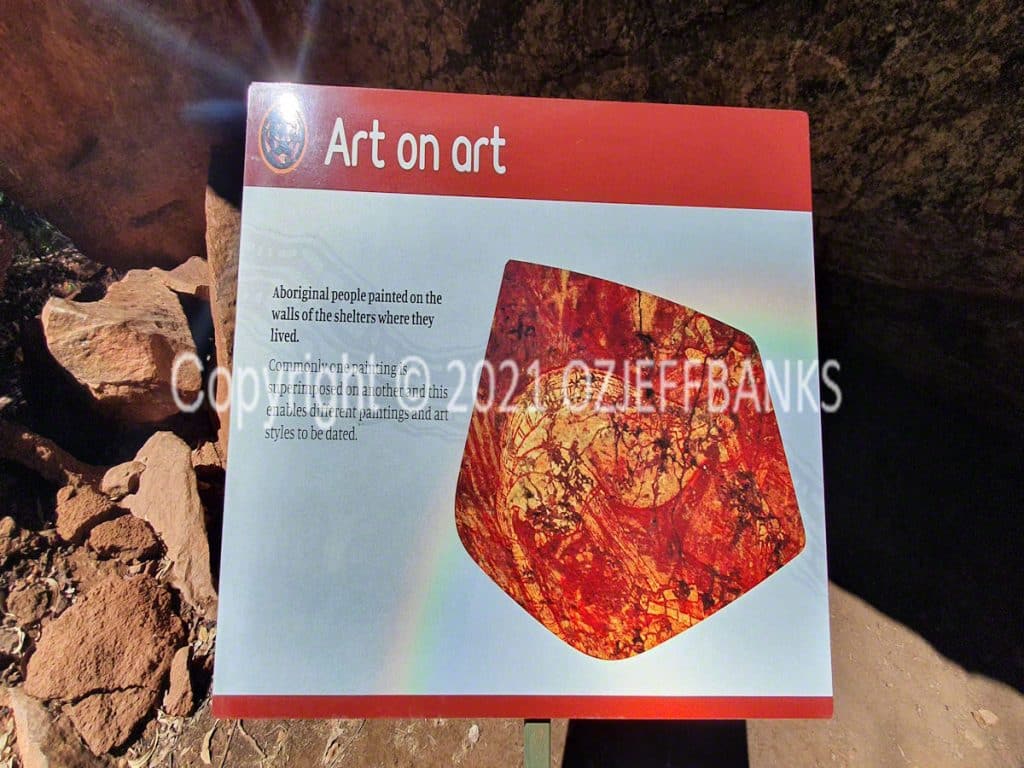
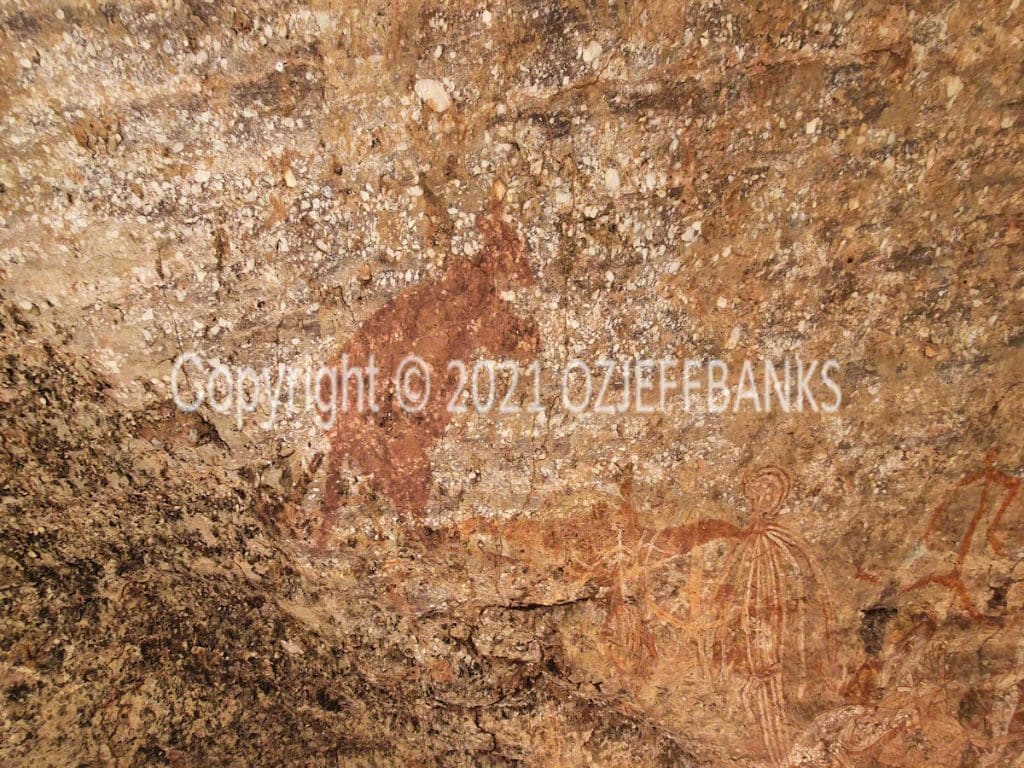
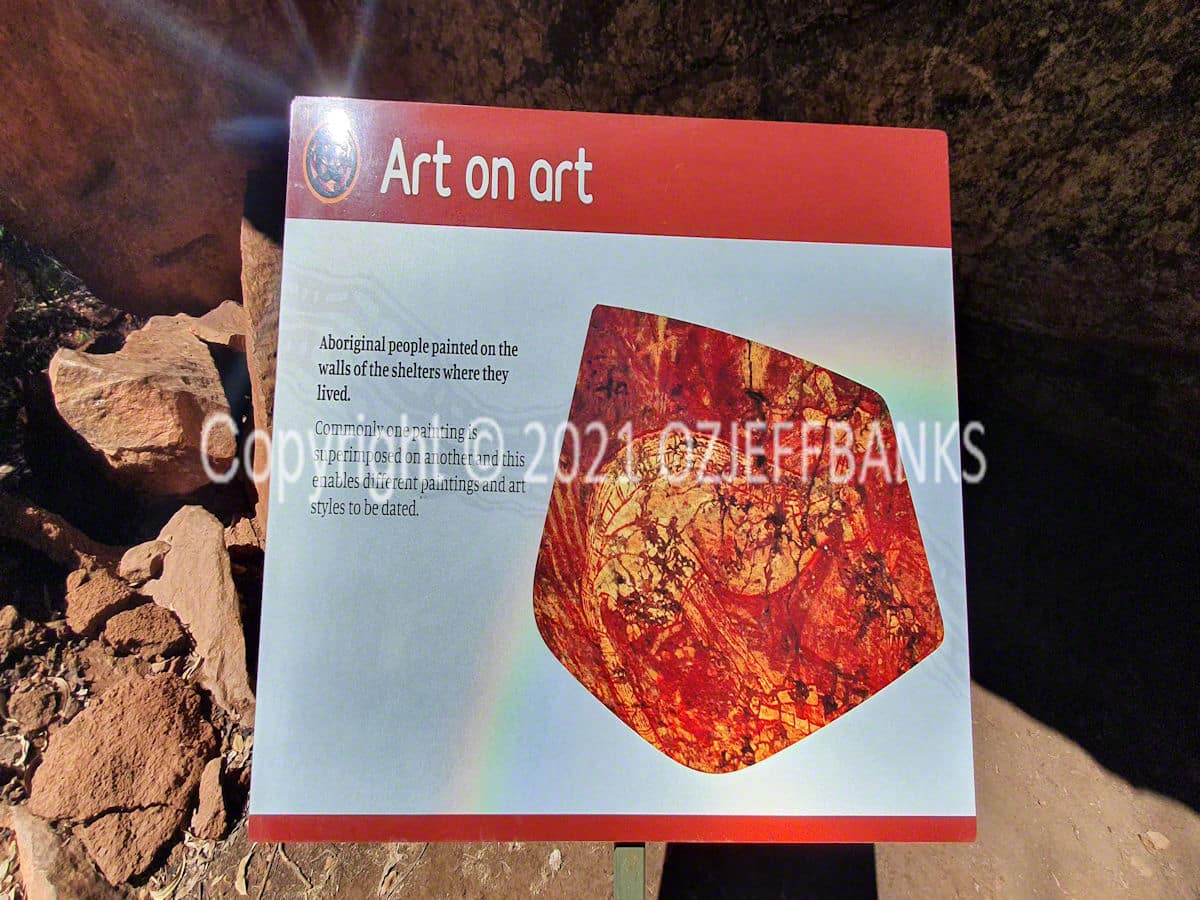
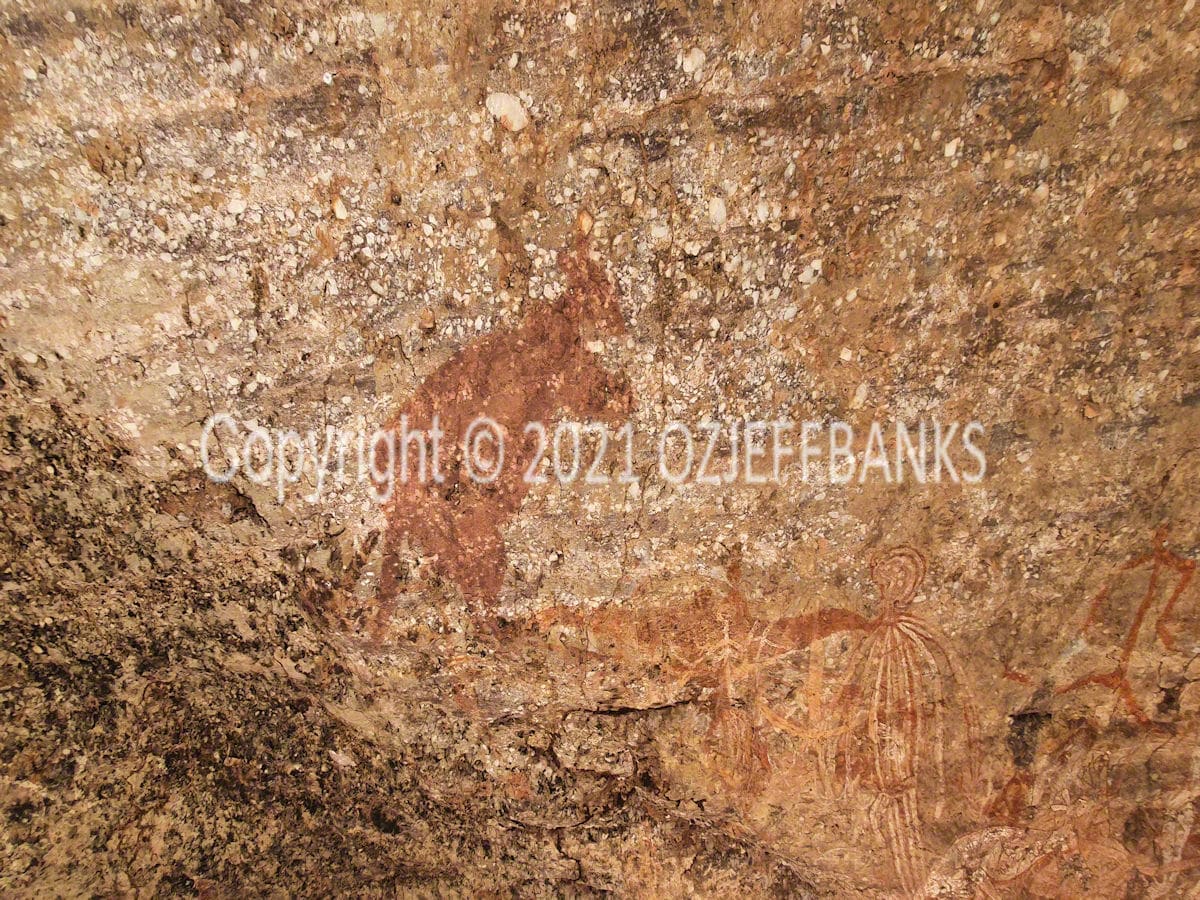
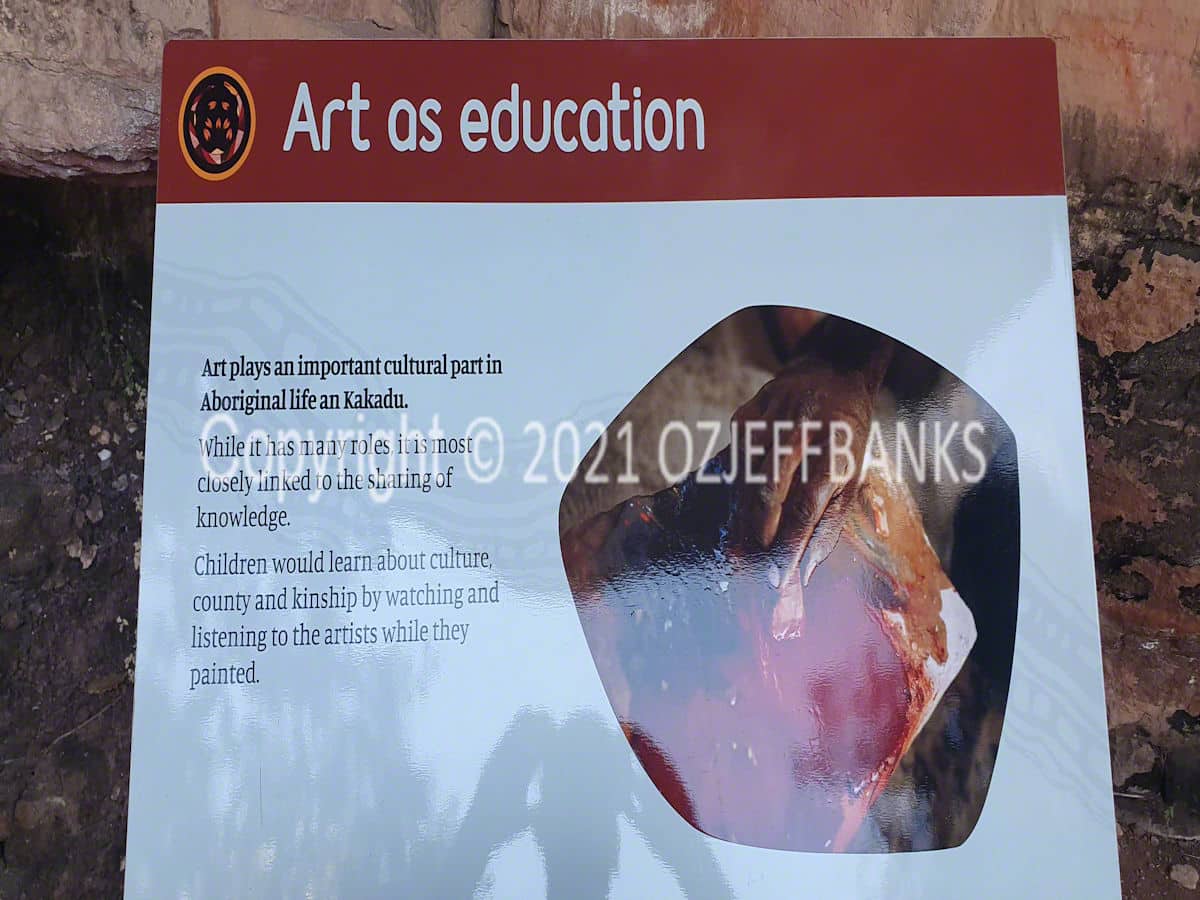
Butterflies seem to lead the way. Every now and then another sign talks of the vegetation or the situation, begging the reader to “sample” on. Sample the great landscape you can see everytime you atop a rise or clambout over a rock. Sample the rock paintings adorning the walls of caves, caverns or just beside tracks as you walk by. Sample the stories the wind is trying to tell you about days gone by, about the struggles for water in the dry season, heat and humidity and the coolness of the camp sites. About the great battle just to survive in an environment so abhorrent to the white man.


For anyone of “heritage” this place and places like it talk to you. I have seen my daughter tested by the murmurings of Kata Tjuta. Yes there are lookouts where the great vistas can be snapped, there are idyllic little campsites set up for us to be in awe of and lords and lots fo Aborignial art. But if you listen, truly listen to the land, there are also stories in the wind and for those willing to listen they will keep you engulfed for hours.


I sneak away from the others, moving quickly to get past the tourist “attractions” in an attempt to take time and listen.


One could do this all day here, but we have other things, tourist things, planned. We gather back at the cruiser and head back for this afternoon, we are to experience the sunset croc tour on the Yellow River Billabong.


Two years ago we had done this tour but as a sunrise exercise. It was amazing then, we expected no less tonight.


Packed into busses we leave the van park for the the short jaunt to the river and the boats. Five boats in total are filled and they all are filled. We are to have Dennis (with 2 “n’s”) as our guide. I wonder as to how the tour may be when he serves up a comeuppance to a traveller seeking to fill a water container from the inside of the water cooler, grabbing ice as well as water. His ire is Covid related as much as anything and the point is well taken if not gruffly presented.


The five boats head off in differing directions.


Out into the water proper we see large catfish scurrying to the weeds for protection. Dennis’s demeanor changes into tour mode. His voice is a little annoying, although I think if you were to ask him he is trying to be a little scary, as he drawls on some points, looking to emphasise importance. 


He is a roly poly type of guy. A thickset derivative of a white bum Maori dad and an Indignenous mother. A local as he would put it.


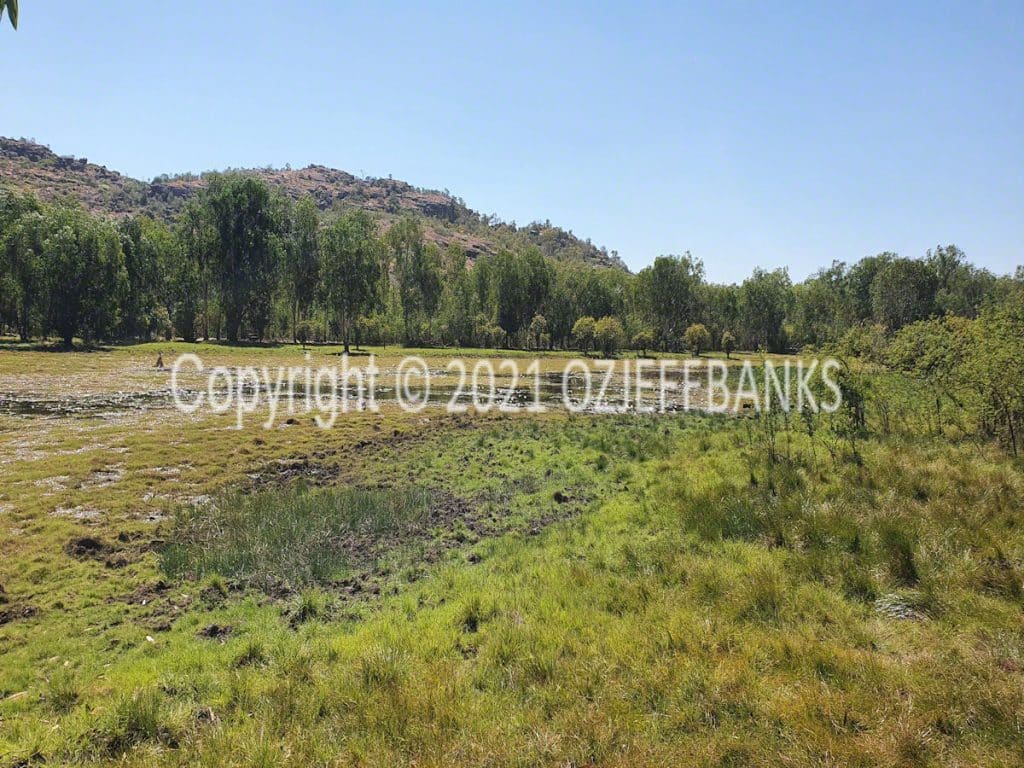
He is quick to point out crocs, and there are plenty to see. We mosey right up alongside them. As apex predators they are not phased by our presence, not even annoyed as the ripples created from the boat wet them, reducing the temperature they are trying to get into their bodies before the night time hunt. 


He points us into a small alcove where three crocs are laying, warming themselves. The water erupts with small Barramundi jumping in all directions. Some hit the side of the boat. Its pandemonium. The crocs in the alcove are unphased. One crocodile in the river proper wanders across. I think we may have interrupted a feeding impoundment.


Dennis points out the damage being done to the environment here. When we were here two years ago the guide talked of some cattle “owned” by a local elder and the difficulty in finding Buffalo for the tourists to glimpse.


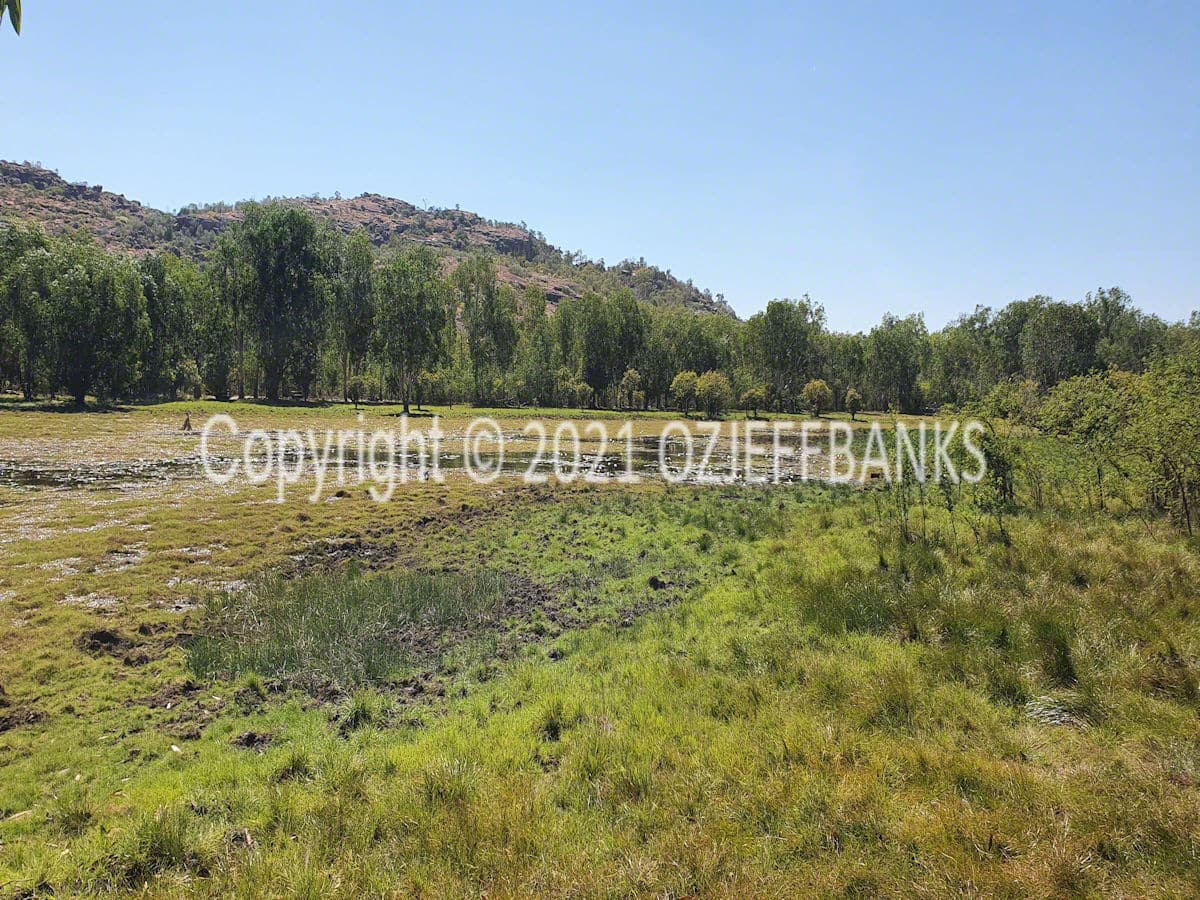
Now one slide of the river is eaten down by herds of buffalo. Female herds on one side, which along with the feral pigs, the Brumbies and the meaning cattle have devastated it. The other side where the male Buffalo roam starting to head in the same direction. Culling is proceeding but the buffalo are cunning animals.


Dennis tells us a shooter is out at the moment and we do hear the odd shot from time to time but the herd remains. The damage being done, becoming more prevalent and the “pastures” lush and green from the last time we were here, are now downtrodden and disappearing. Dennis seems quite upset at what is occurring. Emphasising the need for conservationary approaches to the landscape lest we lose it.


There are nowhere near as many, nor the variety of birds as was our sunrise expedition. If we had had a rifle onboard we could have removed several buffalo, but it is not the way. Locals do the culling. No meat is wasted, shared around the community, suggesting the female herds are probably targeted more than  the male in an attempt to stay away from the ranker male flesh.


He talks of the cool burning techniques of the Indigenous people and how with their control, the undergrowth is reduced while leaving the trees. His explanation fills in many of the questions asked by what we saw on the way here from Mataranka.


He nestles the boat into a spot where the sun leaving us can be seen. Mother Nature does not let us down. The sunset, the changing colours of the sky as the daylight fades are picturesque and the cameras get a huge work out.


In the dark we return  to the boat ramp, ford onto the busses and head back to camp, our last night before heading to Darwin tomorrow.


We share another schnitzel and roam back to bed.

Here We Go Again - Chapter 60 - Cooinda Day 3 | Travelling Around Australia with Jeff Banks

Author

Menu